


English
News Center
—— NEWS CENTER ——
This year marks the opening year of the “15th Five-Year Plan”. As the “core business” and a first-tier subsidiary of China Resources Recycling Group Co., Ltd. (hereinafter referred to as China Resources Recycling), Zihuan Lianjin Renewable Resources Co., Ltd. (hereinafter referred to as Zihuan Lianjin) is accelerating its pace in 2026 on the basis of the initial results achieved in building its industrial platform in 2025. This centrally administered state-owned enterprise, deeply engaged in the recycled steel sector, is writing a new chapter of the times through innovative practices in industrial restructuring and technological breakthroughs: “unblocking the resource recycling chain and building a nationwide, functional resource recovery and reuse platform”……
Building the platform foundation: restructuring industry infrastructure through the “integration of five flows”
The renewable resources industry has long faced a structural challenge: scattered sources of goods and a lengthy transaction chain, making it difficult to integrate physical logistics, capital flow, invoice flow, contract flow, and information flow. This directly results in a recovery rate of less than 50% for compliant enterprises, while problems such as tax evasion, tax leakage, and false transactions occur frequently. In 2026, the “Two New” policy explicitly proposed cracking down on “scattered, disorderly, and polluting” enterprises and promoting a healthy market in which “good money drives out bad money”, putting forward higher requirements for the construction of resource recovery and reuse platforms.
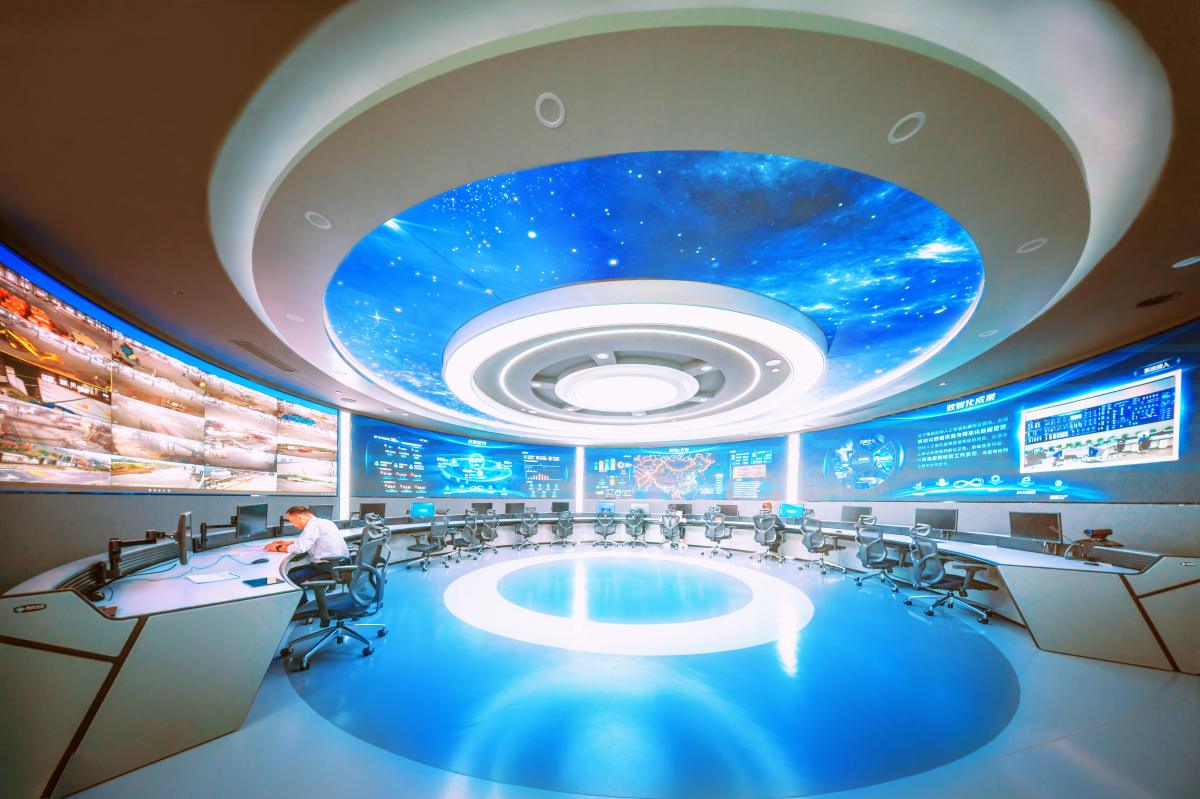
Zihuan Lianjin Shanghai Headquarters Smart Integrated Control Center.
Zihuan Lianjin’s solution is to reshape the industry’s underlying logic through digitalization. Entering the Zihuan Lianjin Smart Integrated Control Center, one can see on the large screen real-time footage of processing bases across the country, transaction data, and logistics information—this is the recycled steel resource recovery and reuse platform that the company spent three years building. For every batch of scrap steel, from source to steel mill, weighbill entry, quality inspection data, and logistics trajectory are all put online, forming an untamperable “digital archive”.
The core of the platform is not simply information aggregation, but the creation of a technical foundation for the “integration of five flows” through continuous product innovation. As one of the core functions of the platform, “reverse invoicing” addresses three major pain points for recycling enterprises: missing input invoices, error-prone manual reconciliation, and difficulty in verifying transaction authenticity, providing a full-process online solution. In 2025, by connecting with the State Taxation Administration’s Leqi Platform, the platform realized an iterative upgrade of its “reverse invoicing” function, becoming the first direct-connected unit to the Leqi Platform in the renewable resources industry. The “material disposal” function provides large waste-generating enterprises with transparent and standardized asset disposal channels. From industrial obsolete materials to scrapped equipment, the entire process is operated online with public bidding, which both improves disposal efficiency and realizes the preservation and appreciation of state-owned assets. The “Second-Hand Car Instant Recycling” product focuses on the recycling of scrapped motor vehicles, enabling car owners to make online appointments, enjoy door-to-door vehicle collection, and complete one-stop processing. In 2025, the “Second-Hand Car Instant Recycling” business had already covered 12 cities nationwide.
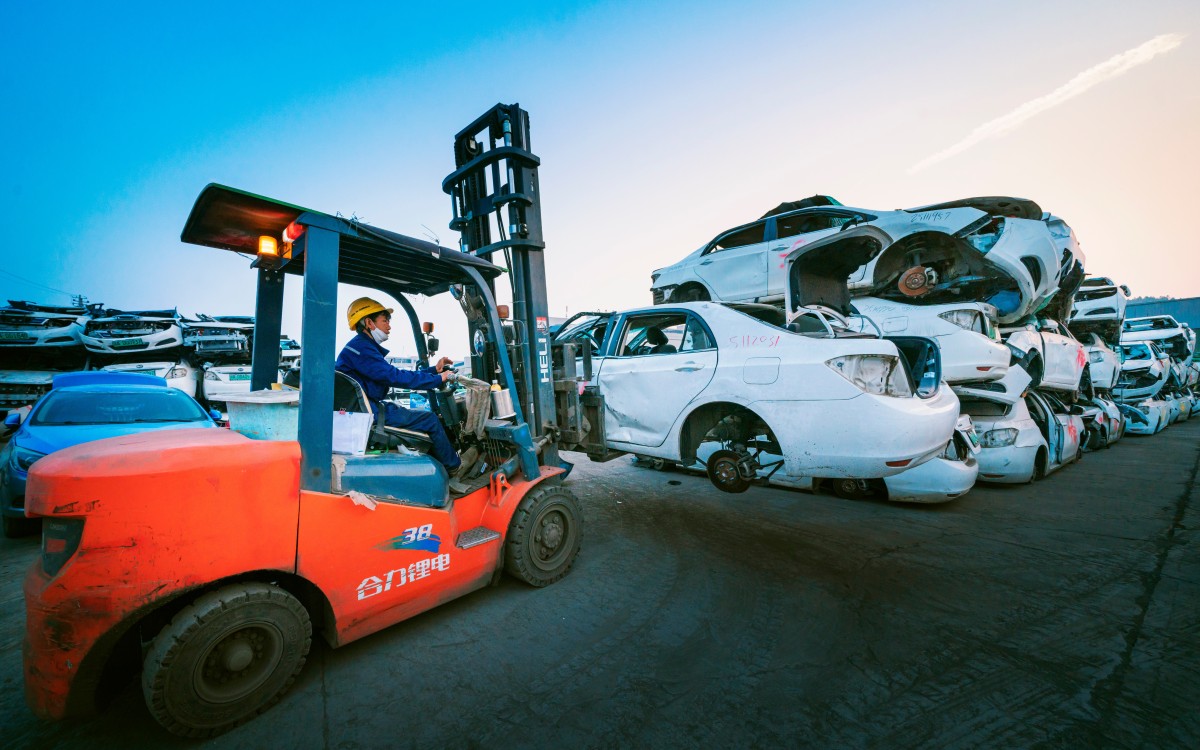
Scrapped motor vehicle dismantling site of Zihuan Lianjin Pingxiang Company.
The Action Plan for Promoting the Application of Recycled Materials clearly requires the establishment of “a full-process traceability system from recycling and processing to production and smelting”. Zihuan Lianjin’s platform practice has provided a replicable technical path for the implementation of this policy. In 2025, the platform added 50,000 new users, with total users exceeding 90,000, transaction volume surpassing 90 million tons, and transaction value exceeding RMB 200 billion—behind these figures, Zihuan Lianjin is reshaping the infrastructure of the renewable resources industry through the power of digitalization.
Deep regional engagement: activating new drivers of the local circular economy through “central-local co-construction”
Building a nationwide, functional platform cannot rely solely on the enterprise fighting alone. Zihuan Lianjin’s approach is to leverage the company’s layout advantage of nearly 400 processing bases nationwide, work closely with local governments, and inject platform capabilities into the construction of regional circular economy systems.
In 2025, Zihuan Lianjin successively signed strategic cooperation agreements with cities such as Ma’anshan and Pingxiang. The jointly built regional renewable resources trading service platforms—the “Ma’anshan Renewable Resources Trading Service Platform”, the “Pingxiang Renewable Resources Trading Service Platform”, and the “Changzhi Waste Trading Platform”—were launched one after another. Supported by a “point-station-yard” recycling system, these platforms jointly advance the construction of “zero-waste cities”, deeply integrating industrial chains, data chains, and carbon-benefit chains with urban development.
Among them, the Pingxiang Renewable Resources Trading Service Platform, relying on its innovative practices in resource recycling, co-construction of infrastructure, and low-carbon transformation pathways, was successfully selected in 2025 as a provincial-level key industrial internet platform cultivation project in Jiangxi Province. In Pingxiang, Zihuan Lianjin simultaneously promoted pilot construction of the “point-station-yard” recycling system—with grassroots recycling points, transfer sorting stations, and processing sites as core nodes, and with platform data connectivity to ensure that recyclable resources are fully collected wherever possible. On this basis, Pingxiang Economic Development Zone joined hands with Zihuan Lianjin Pingxiang Company to plan and build a circular economy industrial park featuring “1,000 mu of park area and RMB 100 billion in output value”. The first phase, covering 300 mu, has already begun planning and layout, aiming to create a comprehensive industrial park integrating renewable resource recovery and utilization, circular economy development, and technological innovation, injecting new momentum into Pingxiang’s “zero-waste city” construction. This exploration of central-local co-construction not only provides replicable experience for the “platform + government” cooperation model, but also sets a benchmark example for other cities to jointly build regional platforms and promote industrial clustering and upgrading.
Technological breakthrough: reshaping scrap steel value with two intelligent “rulers”
If the platform solves the problem of “connection” and deep regional engagement solves the problem of “implementation”, then technological innovation solves the problem of “value”. In Zihuan Lianjin’s strategic layout, two intelligent “rulers” are breaking through the industry’s challenge of identifying scrap steel value.
The first is “intelligent inspection and grading”—equipping scrap steel with AI “fiery golden eyes”. Traditional scrap steel inspection relies on visual judgment, which has large errors and easily leads to quality disputes. The scrap steel intelligent inspection and grading system developed by Zihuan Lianjin integrates computer vision and deep learning technologies. Relying on more than ten specialized testing models and an image sample library of over one million pictures, it achieves intelligent full-process precise grading and impurity identification. At present, the system’s overall recognition accuracy is at a leading domestic level, and it has been applied on a large scale in 12 central bases of Zihuan Lianjin, with cumulative inspection and grading of over 400,000 tons of scrap steel. In September 2025, this system was selected for Anhui Province’s benchmark list of general artificial intelligence scenario applications.
The second is “intelligent sorting”—unlocking the “industrial metallurgy” of laser spectroscopy. On December 22, 2025, China’s first recycled steel intelligent sorting production line based on Laser-Induced Breakdown Spectroscopy (LIBS) technology was successfully put into operation at Zihuan Lianjin’s Yangquan Company. This marks the first large-scale integrated application of LIBS technology in China for online scrap steel sorting and the realization of stable industrial operation. High-energy lasers trigger instantaneously, precisely identifying the alloy element content in stainless steel at the millisecond level, with recognition accuracy exceeding 85% and daily sorting capacity reaching 8 tons. From manual experience to data-driven operation, this breakthrough enables the precise separation of long-mixed low-value scrap steel and high-value alloy steel, delivering high-quality raw materials with stable composition to downstream steel mills.
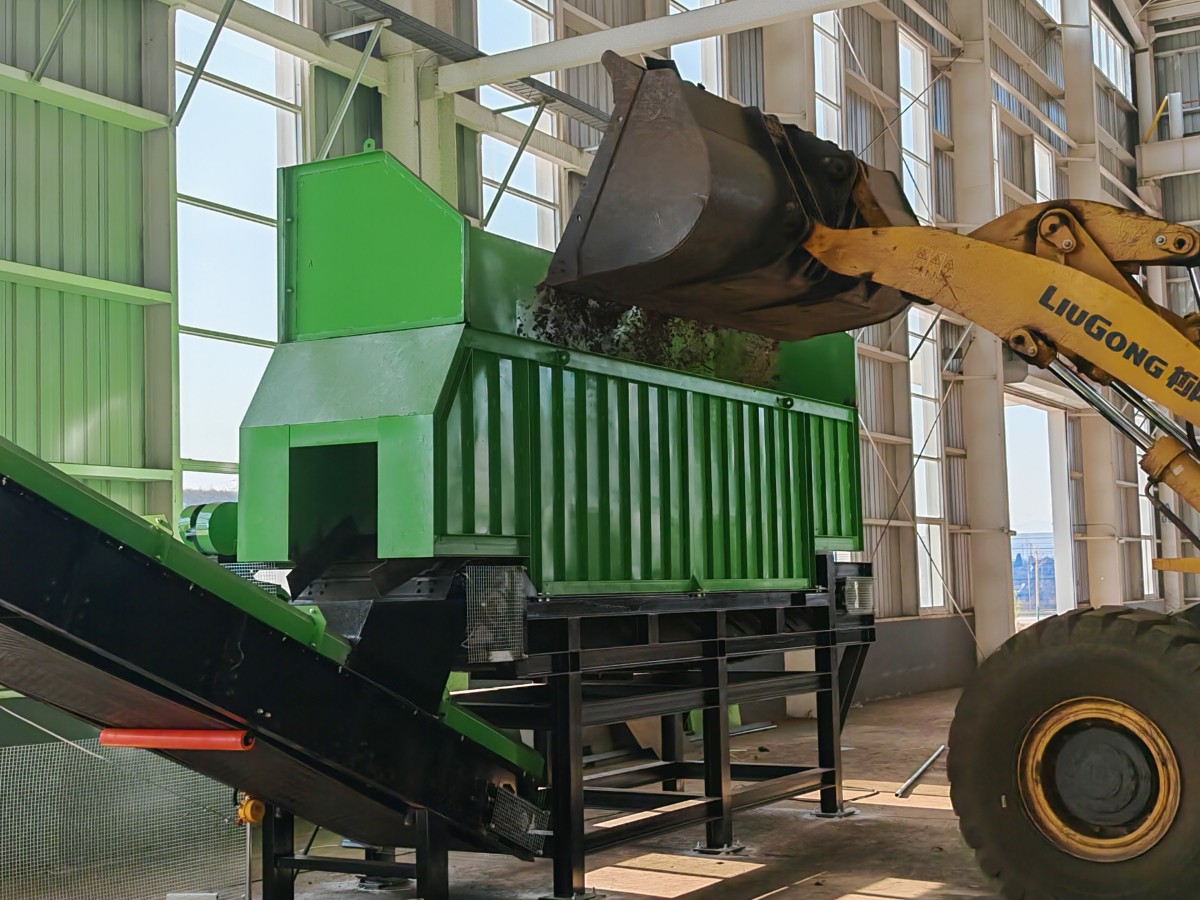
Zihuan Lianjin’s first recycled steel intelligent sorting production line was successfully put into operation at Yangquan Company.
Chain extension: from resource expansion to green empowerment
Building the platform foundation, deep regional engagement, and technological breakthroughs ultimately point to deep integration into the industrial chain and value extension. In 2025, Zihuan Lianjin established strategic cooperation with 22 central state-owned enterprises including Sinotrans and Sinopec, with its annual industrial waste business scale doubling year on year. The “platform + base + logistics” collaborative model developed with Sinotrans has opened up the “last mile” from industrial waste sources to steel enterprises. By deeply developing a tripartite circular recycling model, it has formed a stable closed-loop cooperation chain of “off the production line, onto the platform, into the steel mill” with Midea Group and Zhanjiang Steel, promoting the circular utilization of high-quality scrap steel.
At the same time, Zihuan Lianjin has turned its attention to quantifying “green value”. In November 2025, the company took the lead in launching a carbon management platform for renewable resources, becoming the first enterprise in the industry to achieve full coverage in the release of Product Category Rules (PCR), Carbon Footprint (CFP), and Environmental Product Declarations (EPD). Through blockchain technology, it precisely locks in the carbon footprint of the entire process, issuing an authoritative “carbon ledger” for each batch of recycled steel. This layout coincides with the full implementation of the EU Carbon Border Adjustment Mechanism (CBAM) in 2026, not only providing a basis for domestic steel mills to reduce carbon emissions by using scrap steel, but also laying the foundation for Chinese recycled steel to participate in the future carbon trading market.
The blueprint of the “15th Five-Year Plan” is unfolding. From the platform foundation of the “integration of five flows”, to government-enterprise collaboration in deep regional engagement; from technological breakthroughs in intelligent inspection and grading and intelligent sorting, to the green empowerment of the carbon management platform—every step of Zihuan Lianjin’s exploration is answering the same question: how to build a truly “nationwide and functional” resource recovery and reuse platform. The company’s practice in 2025 shows that the value of a central state-owned enterprise as the main force in the circular economy lies not only in leading in scale, but also in reshaping industrial logic through technological innovation and reconstructing the industry ecosystem through industrial platforms. On the road to unblocking the circular utilization of recycled steel, Zihuan Lianjin is taking solid steps in the opening year of the “15th Five-Year Plan” with the posture of an innovator.
About RESOLAR
Shanghai RESOLAR Energy Technology Co., Ltd. is committed to becoming a recycled material photovoltaic group with deep decarbonization. RESOLAR focuses on technological innovation and builds a world-leading solution for component recycling, impurity removal of damaged cells, recycled silicon materials and cells, and cascaded utilization of components. With professional technology and services, we help customers realize the recycling and reuse of waste photovoltaic resources, and make positive contributions to the development of environmental protection and new energy industries. For more detailed information, you can browse the official website: www.resolartech.com .

Latest developments/news
Contact information
Service Hotline: 13585742918 (Monday to Friday 9:00-18:00)
Enterprise email: ps@resolartech.com (Reply within 48 hours after receiving the email consultation!)
Company Address: Building 8, No. 1528, Wangxu East Road, Fengjing Town, Jinshan District, Shanghai (Caohejing Fengjing Park)