



English
News Center
—— NEWS CENTER ——
Silicon carbide (SiC) is a key material for third-generation compound semiconductors. With physical properties such as a high breakdown electric field, high thermal conductivity, and a wide bandgap, it overcomes the performance limitations of traditional silicon-based power devices. It is a core component in high-voltage, high-power applications including new energy vehicles, AI computing power supplies, photovoltaic energy storage, and rail transit. After the industry experienced overcapacity and an intense price war in 2025, a structural turning point emerged from the fourth quarter of 2025. High-quality substrates and devices for automotive-grade and AI power applications entered a period of tight supply, while supply of low-end general-purpose products remained ample, resulting in clear structural divergence across the industry. The global market has maintained a high compound growth rate over the long term. New energy vehicles form its foundation, while AI computing infrastructure has become a second growth curve. China’s industry chain has made major strides in substrates, with its global market share in 8-inch substrates leading the market. Localization of epitaxy, devices, and modules continues to advance, although automotive-grade certification, yield, cost, and patent barriers remain key weaknesses.
I. Industry Overview: SiC Fundamentals and Industry Chain Structure
1.1 SiC Material Properties and Application Value
Silicon carbide (SiC) is a compound semiconductor material made of silicon and carbon. As a third-generation wide-bandgap semiconductor, it offers three key advantages over traditional silicon (Si): a breakdown electric field strength approximately three times that of silicon, enabling higher voltage ratings; thermal conductivity approximately three times that of silicon, significantly improving heat dissipation; and lower switching losses and greater high-temperature resistance. In high-voltage, high-power conversion applications, SiC power devices can reduce system losses, reduce cooling requirements and size, and improve energy conversion efficiency. They are foundational materials for the energy transition and computing infrastructure.
Traditional silicon-based IGBTs (insulated-gate bipolar transistors) have pronounced limitations in losses and heat dissipation on high-voltage platforms of 800 V and above. SiC MOSFETs (silicon carbide metal-oxide-semiconductor field-effect transistors) are inherently suited to 800 V high-voltage platforms, making them a key choice for high-voltage platforms in new energy vehicles. In addition to power devices, SiC can also be used in emerging applications such as RF devices and thermal management substrates for advanced packaging, opening up greater market opportunities.
1.2 Industry Chain Structure
The SiC industry chain consists of three segments: upstream substrates and epitaxy; midstream chip manufacturing, devices, and power modules; and downstream applications. Substrates are the highest-value and most technologically challenging segment in the entire industry chain, accounting for approximately 47% of total device costs and serving as a key focus of industry competition.
1. Upstream: Substrates and Epitaxy
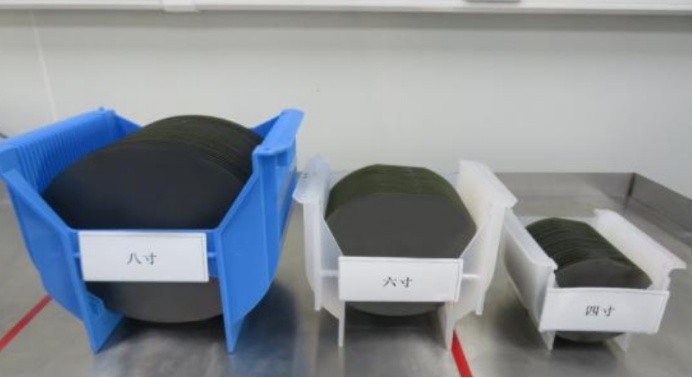
SiC substrates: These are classified as conductive (for power devices, new energy vehicles, energy storage, and AI power supplies) or semi-insulating (for RF devices). The mainstream size is 6 inches, and the industry is transitioning to 8 inches, with 12-inch substrates entering the sample validation stage. Larger wafers are a key route to cost reduction: an 8-inch substrate has 78% more area than a 6-inch substrate, and the number of dies that can be cut from each wafer increases by approximately 1.8–2 times. Edge losses are reduced, bringing wafer costs down by approximately 35%. The main challenges in substrate fabrication are crystal growth yield, defect control, and scaling up wafer size. Crystal growth furnaces, cutting, grinding, and polishing equipment account for major capital expenditure.
Epitaxial wafers: Epitaxial layers are grown on substrates using MOCVD (metal-organic chemical vapor deposition) equipment. Device performance depends on the quality of the epitaxial layer, making this a key link between substrates and chip manufacturing.
2. Midstream: Chip Manufacturing, Devices, and Power Modules
Photolithography, etching, ion implantation, and other semiconductor processes are performed on SiC epitaxial wafers to produce chips such as MOSFETs and SBDs (Schottky barrier diodes). These are then packaged into power modules and supplied directly to downstream end-product manufacturers. Most overseas IDM (integrated device manufacturer) companies, including STMicroelectronics, Infineon, and Wolfspeed, cover the entire chain from substrates and epitaxy to devices and modules. Chinese companies more commonly follow a specialized division-of-labor model, with substrate suppliers, epitaxy manufacturers, device design companies, and packaging companies operating independently, although some companies are expanding upstream.
3. Downstream Applications
New energy vehicles are the primary market, with applications in main inverters, onboard OBCs (onboard chargers), DC-DC converters, and onboard charging systems. Other applications include photovoltaic inverters, energy storage converters, industrial power supplies, high-voltage power supplies for AI servers, rail transit, high-voltage power grids, and fast-charging infrastructure. An emerging application is thermal management substrates for advanced packaging of AI computing chips.
II. Global and Domestic SiC Industry Landscape
2.1 Market Size and Growth Overview
The global SiC power device market continues to grow rapidly. In 2025, the global SiC power device market was valued at approximately RMB 40.691 billion. Industry estimates project a CAGR of 20.5% from 2026 to 2032, with the market reaching RMB 147.968 billion in 2032. Kaiyuan Securities forecasts that the global SiC market will reach USD 12.4 billion by 2030, with AI infrastructure accounting for nearly half of incremental demand and breaking the market’s previous reliance on new energy vehicles as its sole growth driver.
In terms of demand structure, new energy vehicles currently account for approximately 61% of SiC device revenue, making them the largest application market. Rising penetration of 800 V high-voltage platform vehicles directly increases SiC content per vehicle. AI server power supplies and photovoltaic-storage-charging applications are the second growth curve. SiC was previously viewed primarily as a material for the new energy vehicle sector. The industry’s growth model has now evolved to be driven by three factors: “new energy vehicles + AI computing power + new energy storage.”
2.2 Supply and Demand: Deep Correction in 2025, Structural Shortages in 2026
From 2021 to 2024, large amounts of domestic capital flowed into the SiC sector, and numerous 6-inch substrate projects were launched in quick succession, rapidly expanding industry capacity. This coincided with weaker-than-expected demand at a particular stage of the new energy vehicle market in 2025, triggering an intense price war. Prices for low-end substrates and general-purpose devices fell sharply, many small and medium-sized manufacturers operated at a loss, and the industry entered a capacity-clearing cycle. Capacity utilization for low-end products dropped significantly, and some manufacturers exited the market.
The supply-demand balance began to reverse in the fourth quarter of 2025. However, this is not a market-wide supply shortage, but a structural one:
(1) High-quality conductive substrates, epitaxial wafers, and MOSFET modules for automotive-grade and AI power applications are in tight supply. Capacity utilization at leading substrate manufacturers has recovered to over 90%. Prices for 6-inch substrates have rebounded from their bottom, while 8-inch substrate prices have stopped falling and edged up. Overseas IDM companies Infineon and STMicroelectronics, as well as domestic companies such as Yangjie Technology, have raised device prices. Lead times for SiC devices used in AI server power supplies have extended to around 30 weeks, and prices have risen by more than 15% compared with the end of 2025.
(2) Supply of low-end substrates with poor defect metrics and no automotive-grade certification, as well as general-purpose industrial devices, remains in surplus, with prices under continued pressure.
The key outcome of this industry shakeout is a shift in competition from capacity scale alone to comprehensive capabilities in yield, defect control, automotive-grade certification, reliable delivery, and cost control. Industry concentration continues to rise, benefiting leading companies.
2.3 Global Competitive Landscape
Established overseas leaders have a first-mover advantage and mainly follow the IDM model: Wolfspeed (United States, formerly Cree), ROHM (Japan), STMicroelectronics (ST), Infineon, and onsemi. Overseas manufacturers have built up extensive expertise in substrate patents, automotive-grade customer certification, device processes, and module packaging, and have long held a major share of the global power device market.
Chinese companies have made major breakthroughs in substrates. In 2025, Chinese companies took a global lead in conductive substrates. SICC’s global market share in 8-inch SiC substrates exceeded 50%, and its global share of 6-inch conductive substrates ranked first. Combined, SICC and TankeBlue Semiconductor’s share of the conductive substrate market exceeded Wolfspeed’s. China accounts for approximately 50% of global SiC substrate supply, placing it in the top tier worldwide. China’s epitaxy, device, and module segments are still catching up. Domestic device manufacturers continue to lag overseas leaders in automotive-grade certification, reliability, and stable delivery at scale. The top five companies account for a combined 70.4% of China’s power device market, and all three leading companies are overseas manufacturers; domestic manufacturers still have a relatively low market share.
Representative companies in each segment of China’s industry chain include:
(1) Substrates: SICC, TankeBlue Semiconductor, Luxshare Technology;
(2) Epitaxy: SICC, San’an Optoelectronics, Yangtze Optical Electronic;
(3) Devices / Modules: StarPower Semiconductor, CRRC Times Electric, Silan Microelectronics, Yangjie Technology, Basic Semiconductor;
(4) Upstream equipment: Jingsheng Mechanical & Electrical (crystal growth furnaces), Jingsheng Equipment, AMEC (MOCVD epitaxy equipment).
2.4 China’s Domestic Policy Environment
As a third-generation semiconductor and a key sector for new-quality productive forces, SiC is part of China’s strategy for achieving self-reliance and controllability in semiconductors. The national 14th and 15th Five-Year Plans continue to support the commercialization of third-generation semiconductor materials and devices. Multiple local governments have established dedicated industry funds and provide subsidies for production line construction, R&D investment, and commercialization projects. Policies supporting China’s new energy vehicle, photovoltaic energy storage, and computing infrastructure industries also indirectly drive downstream demand for SiC. Policy incentives are accelerating validation and adoption of domestic supply chains, while subsidies are gradually shifting from capacity expansion toward quality indicators such as R&D, yield improvement, and automotive-grade certification.
III. Downstream Demand Analysis: Three Growth Drivers Reshape the Market Outlook
3.1 New Energy Vehicles: The Industry’s Foundation, with 800 V Platforms Increasing SiC Value per Vehicle
New energy vehicles remain the largest source of SiC demand. Traditional 400 V platforms primarily use silicon-based IGBTs, while 800 V high-voltage platforms offer advantages such as fast charging, reduced weight, and longer driving range, making SiC MOSFETs the mainstream solution. SiC devices are used in components such as main inverters, onboard OBCs, and DC-DC converters. The value of SiC per vehicle is significantly higher than in 400 V silicon-based solutions.
Major global automakers, including Tesla, BYD, NIO, XPeng, Volkswagen, and Mercedes-Benz, continue to adopt SiC solutions in high-end models. As 800 V platform models move into the mid-range segment, SiC penetration will continue to rise. In the short term, the new energy vehicle industry faces pressure from sales fluctuations, but the long-term electrification trend is clear. Rising penetration of 800 V platforms is a definite trend that will continue to drive demand for SiC devices.
3.2 AI Data Center Power Supplies: The Second Growth Curve, Reshaping the Industry’s Growth Ceiling
AI large-model computing clusters require vast numbers of server power supplies, and upgrades to AI server high-voltage power architectures are generating substantial SiC demand. Traditional server power supplies mainly use silicon-based devices, while the high power and density of AI power supplies place greater demands on losses, heat dissipation, and power density. SiC devices can significantly reduce power supply losses and size, while easing cooling requirements. Kaiyuan Securities forecasts that AI infrastructure will account for nearly half of SiC market demand by 2030, making it the industry’s most important source of incremental demand.
Emerging application: SiC can be used as a high-thermal-conductivity substrate in CoWoS (chip-on-wafer-on-substrate) advanced packaging and for thermal management of computing chips paired with HBM (high-bandwidth memory). If commercialized, SiC would expand from power device materials into functional materials for advanced packaging, substantially increasing its value per chip and opening up a new market. However, this application remains at the customer sample validation stage, and its commercialization is uncertain.
3.3 Photovoltaic Energy Storage, Industry, and Rail Transit: Stable Incremental Demand
Global photovoltaic and energy storage installations continue to grow. Centralized inverters, string inverters, and energy storage converters (PCS) are gradually transitioning from silicon-based solutions to SiC solutions, increasing inverter power density and conversion efficiency. Industrial motors, high-voltage power supplies, rail transit, and high-voltage power transmission are stable sources of medium- to long-term demand. These applications are characterized by long certification cycles, stable orders, and long product lifecycles, and require extremely high device reliability.
About RESOLAR
Shanghai RESOLAR Energy Technology Co., Ltd. is committed to becoming a recycled material photovoltaic group with deep decarbonization. RESOLAR focuses on technological innovation and builds a world-leading solution for component recycling, impurity removal of damaged cells, recycled silicon materials and cells, and cascaded utilization of components. With professional technology and services, we help customers realize the recycling and reuse of waste photovoltaic resources, and make positive contributions to the development of environmental protection and new energy industries. For more detailed information, you can browse the official website: www.resolartech.com .

Latest developments/news
Contact information
Service Hotline: 13585742918 (Monday to Friday 9:00-18:00)
Enterprise email: ps@resolartech.com (Reply within 48 hours after receiving the email consultation!)
Company Address: Building 8, No. 1528, Wangxu East Road, Fengjing Town, Jinshan District, Shanghai (Caohejing Fengjing Park)