


English
News Center
—— NEWS CENTER ——
According to reports by the China Environment APP, distributed photovoltaic systems in China have entered the decommissioning period, and recycling and disposal have fallen into a dilemma of unclear responsibility.Unlike the clearly defined owner responsibility system for centralized power stations, distributed photovoltaic systems featurescattered ownership and difficulty in tracing responsibility, and in addition, policies only support rather than mandate manufacturers to carry out recycling. Most manufacturers have a shorter operating lifespan than the service life of the modules, and intense industry competition has led to inverted costs, resulting in a broken chain of recycling responsibility.
Lü Dongdong of Sichuan Yongan Guangxun Circular Environmental Protection Technology revealed thatthere are already more than one hundred informal small-scale photovoltaic recycling workshops nationwide, with more than 10 in provinces such as Hebei, Henan, and Zhejiang. These small workshops make no environmental protection investment, bid aggressively at high prices, and their crude disposal methods cause resource waste and environmental pollution, squeezing the survival space of compliant enterprises.
Industry insiders suggest that the state, manufacturers, and users should collaborate to establisha dedicated recycling platform, and througha whitelist system, qualified enterprises can be allowed to carry out recycling and disposal. There are already precedents for this approach abroad, such as setting up dedicated recycling bins. After modules are scrapped, they cannot be sold casually, but must be placed in recycling bins and handled uniformly by professional institutions.
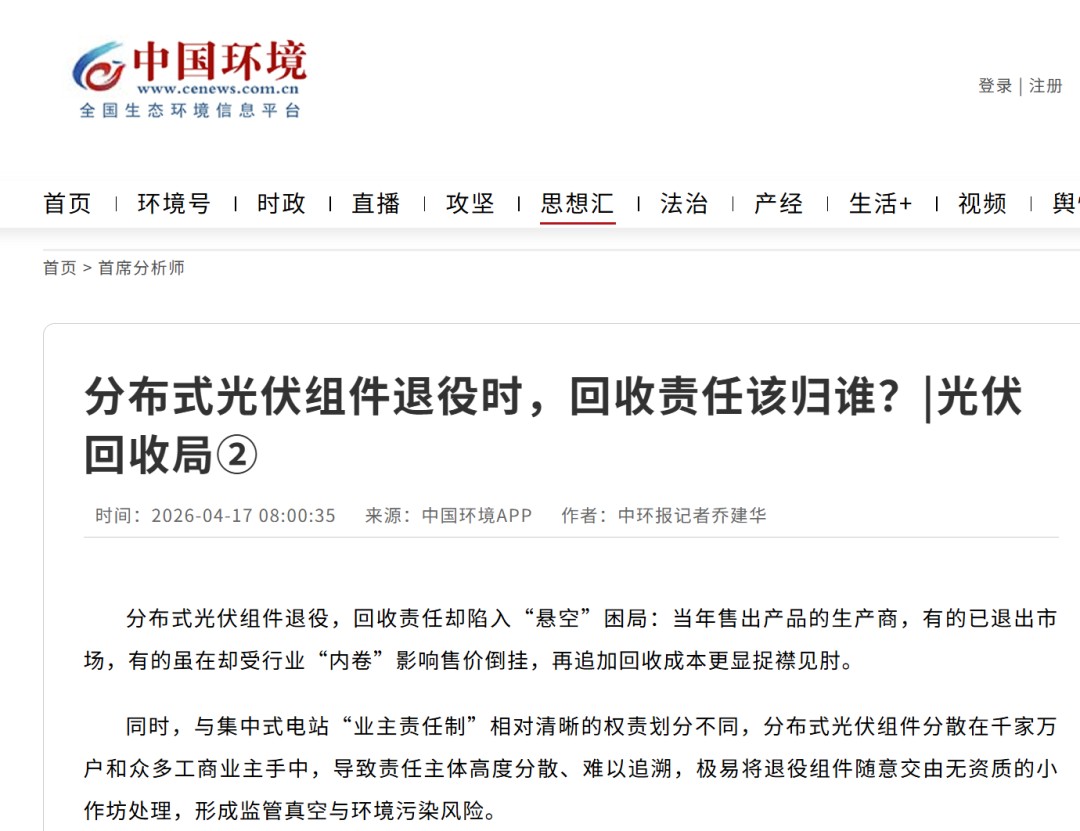
China's distributed photovoltaic systems have already begun early decommissioning, and recycling and disposal have fallen into adilemma of unclear responsibility and regulatory vacuum, with prominent risks of environmental pollution and resource waste. Unlike the “owner responsibility system” for centralized power stations, distributed photovoltaic systems are scattered across thousands of households, making responsible parties unclear and difficult to trace. Policies only support manufacturers in recycling, without mandatory requirements; meanwhile, module lifespans can reach 20—30 years, and many manufacturers have long since exited the market, making “whoever produces is responsible” difficult to implement. Combined with intense industry competition and inverted selling prices, operating enterprises are unable to bear recycling costs, and the responsibility chain has been completely broken. A key problem caused by the break in the recycling responsibility chain is that accountability is difficult to pursue. For centralized photovoltaic power stations, disposal responsibility lies with the owner entity. Once the owner entity fails to fulfill standardized disposal responsibilities, for example by selling photovoltaic panels to unqualified small workshops for disposal, it will be held accountable accordingly. Butdistributed photovoltaic systems are highly dispersed in terms of ownership and difficult to trace. The absence of responsibility has given rise to a huge gray market, where informal small workshops are proliferating wildly.Lü Dongdong of Sichuan Yongan Guangxun made it clear: except for Tibet, where there are relatively fewer small workshop locations, almost every other province basically has 2—3 informal small workshops,and some provinces such as Hebei, Henan, and Zhejiang even have more than 10,bringing the nationwide total of small workshops to over one hundred. These small workshops springing up everywhere are creating hidden dangers for both the industry and the environment. Huang Haiyan of Chint New Energyshared insights on two aspects: “First, the current market order for photovoltaic module recycling is still not standardized enough,and some companies simply clean used modules before putting them back into the market, making product quality difficult to guarantee and affecting the industry ecosystem; second, some recycling and disposal companies only obtain short-term profits by simply dismantling aluminum frames, while high-value resources such as silver, silicon, and copper in the modules are wasted, causing resource loss.” As is well known, small workshop recycling and disposal enterprises have inherent cost advantages, with lower transportation and labor costs. At the same time, they make no environmental protection investment, so their overall costs are lower than those of compliant enterprises. Therefore, they are able to outbid compliant enterprises with higher recycling prices for used photovoltaic modules, while compliant enterprises have high operating costs and no price advantage, making it easy for them to “go hungry” and difficult to achieve economies of scale in disposal. In order to ensure capacity utilization, compliant enterprises sometimes have no choice but to purchase processed raw materials from small workshops. Even more alarming is that, in order to extract metals, small workshopsabuse strong acids and strong alkalisand,without pollution discharge permits, directly discharge wastewater, and incinerate fluorine-containing backsheets to producetoxic gases. Harmful substances such as lead, fluorine, seriously pollute soil and water sources, posing enormous hazards. Lü Fang believes that, to break the deadlock in the standardized recycling and disposal of distributed photovoltaic panels, the first priority is to clarify the entity responsible for disposal.Industry insiders generally believe that, in the end, multiple parties will likely need to share responsibility together: manufacturers should consider at the design stage how to facilitate dismantling and recycling;power station owners and users should hand over and sell in accordance with regulations; the government should providepolicy and financial support and enforce strict supervision; and public environmental awareness also needs to keep pace. Many industry insiders believe thatthe state, manufacturers, and users should collaborate to establish a dedicated recycling platform, and through awhitelist system, allow qualified enterprises to carry out recycling and disposal. There are already precedents for this approach abroad, such as setting updedicated recycling bins. After modules are scrapped, they cannot be sold casually, but must be placed in recycling bins and handled uniformly by professional institutions. Article 977 of the Ecological Environment Code of the People's Republic of China clearly states: “The state shall establish and improve the responsibility system for the disposal of decommissioned equipment of wind power and photovoltaic power generation enterprises.” Some experts believe that although the specific responsibilities for distributed photovoltaic systems still need to be further refined,the rigidity of the law will certainly force all parties to act as soon as possible. Original link: https://cenews.com.cn/news.html?aid=1779608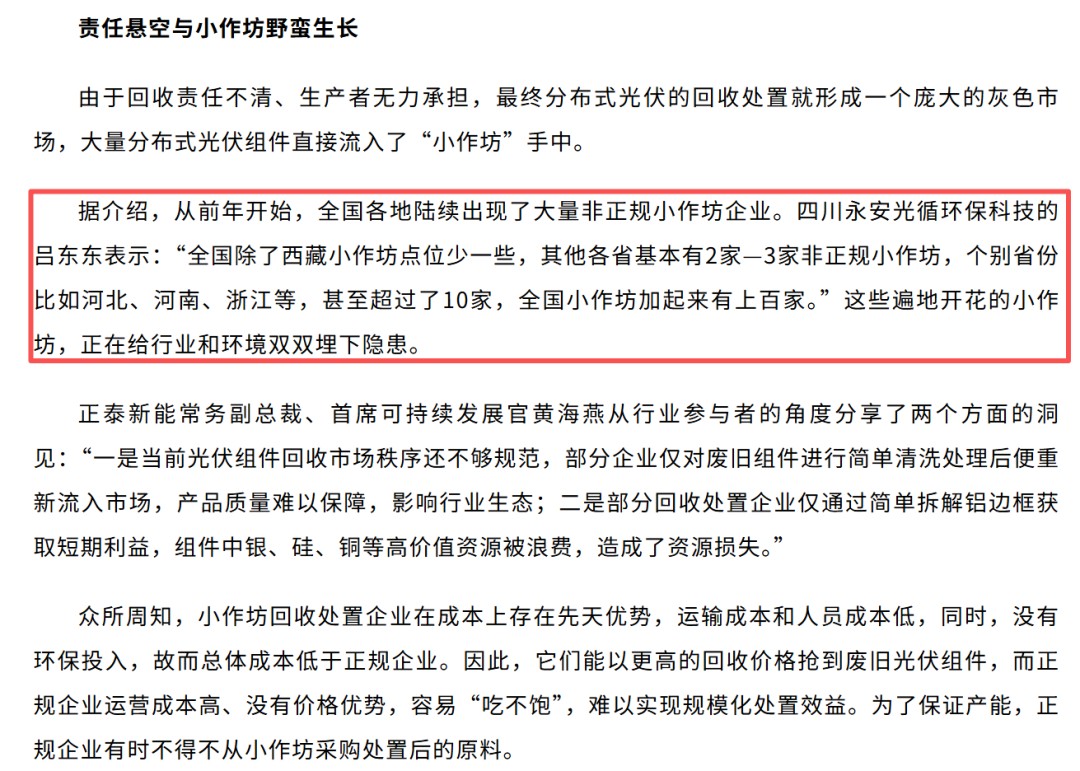
About RESOLAR
Shanghai RESOLAR Energy Technology Co., Ltd. is committed to becoming a recycled material photovoltaic group with deep decarbonization. RESOLAR focuses on technological innovation and builds a world-leading solution for component recycling, impurity removal of damaged cells, recycled silicon materials and cells, and cascaded utilization of components. With professional technology and services, we help customers realize the recycling and reuse of waste photovoltaic resources, and make positive contributions to the development of environmental protection and new energy industries. For more detailed information, you can browse the official website: www.resolartech.com .

Latest developments/news
Contact information
Service Hotline: 13585742918 (Monday to Friday 9:00-18:00)
Enterprise email: ps@resolartech.com (Reply within 48 hours after receiving the email consultation!)
Company Address: Building 8, No. 1528, Wangxu East Road, Fengjing Town, Jinshan District, Shanghai (Caohejing Fengjing Park)