


English
News Center
—— NEWS CENTER ——
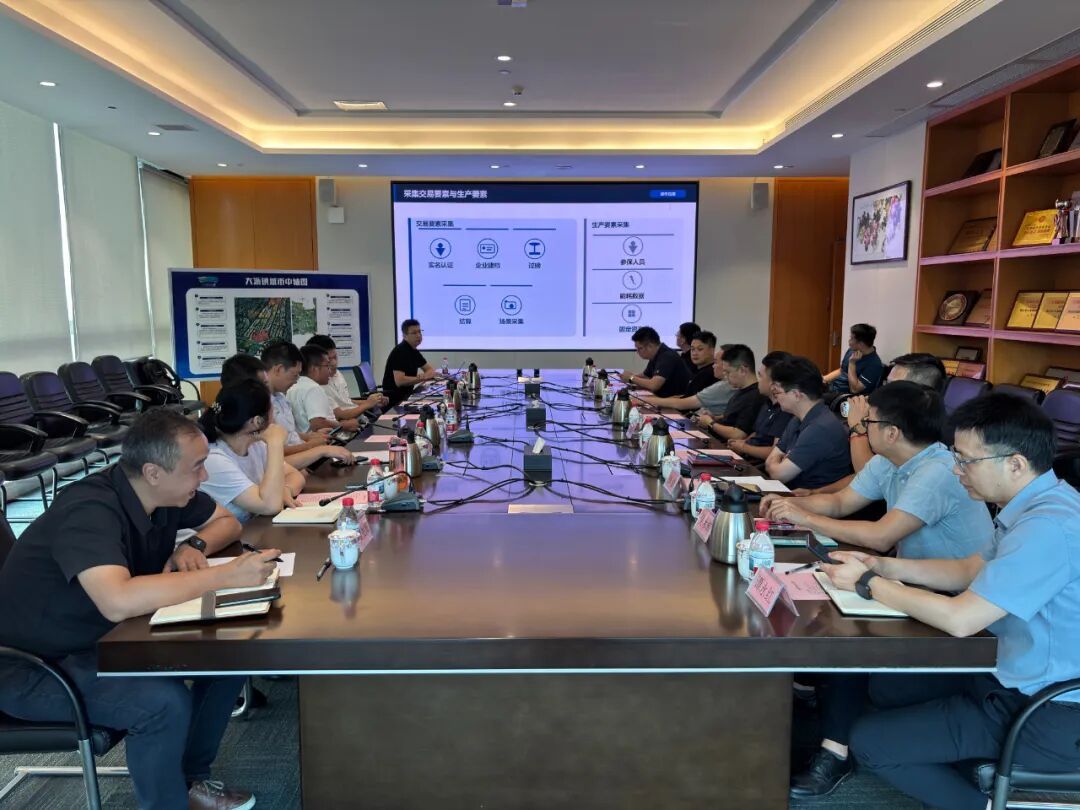
On September 29, 2026, Dali Town convened a symposium on the recycling industry for renewable resources. Participants held in-depth discussions on key topics, including compliant management of reverse invoicing in the industry and pathways to high-quality development, and explored ways to upgrade and enhance the quality of Dali’s renewable resources sector. Attendees included Chen Ruitang, Mayor of Dali Town; Deputy Mayors Zhang Tiewu and Wang Jiawei; relevant officials from the Town’s Economic Development Office and Taxation Sub-branch; representatives from China Recycling (Shenzhen) Metal Resources Co., Ltd. and Foshan Shanlianyun Network Technology Co., Ltd.; and representatives of leading local renewable resources recycling companies.
In recent years, to address longstanding challenges in the renewable resources recycling industry, such as difficulties issuing invoices and the outflow of output value, Dali Town has actively explored new models for digital oversight. It commissioned Foshan Shanlianyun Network Technology Co., Ltd. to develop and build a digital chain-based oversight system for renewable resources. With the joint support of China Recycling (Shenzhen) Metal Resources Co., Ltd., the system was first implemented at leading local companies such as Xingmei Group, enabling closed-loop digital oversight of the entire renewable resources recycling transaction process.
According to reports, the system consolidates and collects data across the entire transaction and production chain, focusing on four key stages: real-name verification, company registration, weighbridge data capture, and settlement verification. Individual suppliers must complete three successive identity checks: ID document recognition, liveness detection, and verification against public security records. After a dedicated QR code is generated, it is linked to the company registration record. At the weighing stage, key information such as cargo weight, vehicle license plate numbers, and on-site images is captured in real time. At the settlement stage, weigh tickets, settlement statements, business contracts, invoices, and bank transaction records are collected and cross-checked as a “five-document” set, ensuring that every transaction is genuine and traceable and that data records cannot be tampered with.
Leading companies in the first group connected to the platform are now conducting reverse invoicing smoothly. The system plays an important role in verifying the flow of goods and the identities of individual suppliers, as well as helping companies clarify the boundaries of their compliance responsibilities. It provides a solid digital foundation for the standardized development of Dali’s renewable resources recycling industry.
At the symposium, Hu Yu, Executive Deputy General Manager of China Recycling (Shenzhen) Metal Resources Co., Ltd., drew on his industry experience to propose a “three-principle” approach to compliant reverse invoicing, which was widely endorsed by the participating companies. First, make prudent use of the quota: the reverse invoicing quota secured by Dali was hard-won, so companies must build genuine business operations and pursue steady, long-term development, resolutely avoiding violations driven by short-term gains. Second, exercise appropriate control: internal operating standards must be stringent and implemented in practice, firmly upholding the bottom line for compliant business operations. Third, ensure authenticity: genuine transactions are the core prerequisite for reverse invoicing. Dali has a solid physical supply base and can leverage its latecomer advantages to advance higher-quality industry development.
Representatives from Xinghai Group, Xingmei Group, and other companies also shared their views. Drawing on their own production and business operations, they offered recommendations on industrial transformation and upgrading, iterative improvements to the oversight system, and corporate compliance management, contributing business insights to the high-quality development of the industry.
Three Work Priorities Set Out to Chart a Course for Industrial Development
In his remarks, Chen Ruitang said that the renewable resources industry is a sector with significant potential within Dali Town’s “254” modern industrial system and is also a pillar industry that the town will focus on cultivating in the future. Standardization and rectification of the industry present both an immediate challenge and a development opportunity. Taking this symposium as an opportunity, Dali will focus on three areas of work to promote the orderly and standardized development of the renewable resources recycling industry.
First, explore a collaborative development model involving “national enterprises, local state-owned capital, and local leading companies.” Dali will actively bring in central state-owned enterprises and local state-owned capital to provide strong support for industrial development and foster a healthy development ecosystem. Second, improve compliance mechanisms and encourage high-quality companies to grow stronger and larger. Third, deepen comprehensive industry regulation, strengthen government service support for businesses, and promote industrial clustering.
Chen Ruitang said that Dali will accelerate the development of its compliance framework and establish an industry compliance benchmark recognized by higher-level authorities. The town will seize a first-mover advantage in competition with surrounding areas and make every effort to promote the intensive, green, standardized, and high-quality development of the renewable resources industry.
About RESOLAR
Shanghai RESOLAR Energy Technology Co., Ltd. is committed to becoming a recycled material photovoltaic group with deep decarbonization. RESOLAR focuses on technological innovation and builds a world-leading solution for component recycling, impurity removal of damaged cells, recycled silicon materials and cells, and cascaded utilization of components. With professional technology and services, we help customers realize the recycling and reuse of waste photovoltaic resources, and make positive contributions to the development of environmental protection and new energy industries. For more detailed information, you can browse the official website: www.resolartech.com .

Latest developments/news
Contact information
Service Hotline: 13585742918 (Monday to Friday 9:00-18:00)
Enterprise email: ps@resolartech.com (Reply within 48 hours after receiving the email consultation!)
Company Address: Building 8, No. 1528, Wangxu East Road, Fengjing Town, Jinshan District, Shanghai (Caohejing Fengjing Park)