


English
News Center
—— NEWS CENTER ——
On September 18, 2026, the Department of Ecology and Environment of the Ningxia Hui Autonomous Region issued the 15th Five-Year Plan for the Prevention and Control of Solid Waste Pollution in Ningxia, which states:
By 2030, special campaigns in key areas will have achieved notable results, and the capacity and level of comprehensive solid waste management will have improved across the board. The “one-network” information-based supervision system for solid waste will cover all key areas.
Strengthen environmental supervision of retired new energy equipment. Strengthen source management of emerging solid waste, including waste photovoltaic modules, waste wind turbine blades, and waste traction batteries. Carry out special joint law enforcement campaigns to standardize the recycling and utilization of used traction batteries, as well as special campaigns to address the illegal recycling and dismantling of end-of-life motor vehicles. Support research and development of intelligent dismantling and high-value utilization technologies for retired new energy equipment. Implement extended producer responsibility for traction batteries and new energy vehicles, and encourage photovoltaic and wind power stations to sell retired new energy equipment to comprehensive utilization enterprises.
Carry out special campaigns to address the illegal dumping and disposal of solid waste. Establish an aerial monitoring network using technologies such as satellite remote sensing and drone patrols, supplemented by grid-based ground inspections, to comprehensively investigate and address the illegal dumping and landfilling of solid waste and the illegal dismantling and disposal of discarded equipment and consumer goods, effectively curbing the high incidence of illegal solid waste dumping and disposal. Strengthen information sharing on solid waste, discarded equipment and consumer goods, including generation data, intended uses and quantities, transport vehicles, disposal data, and illegal cases.
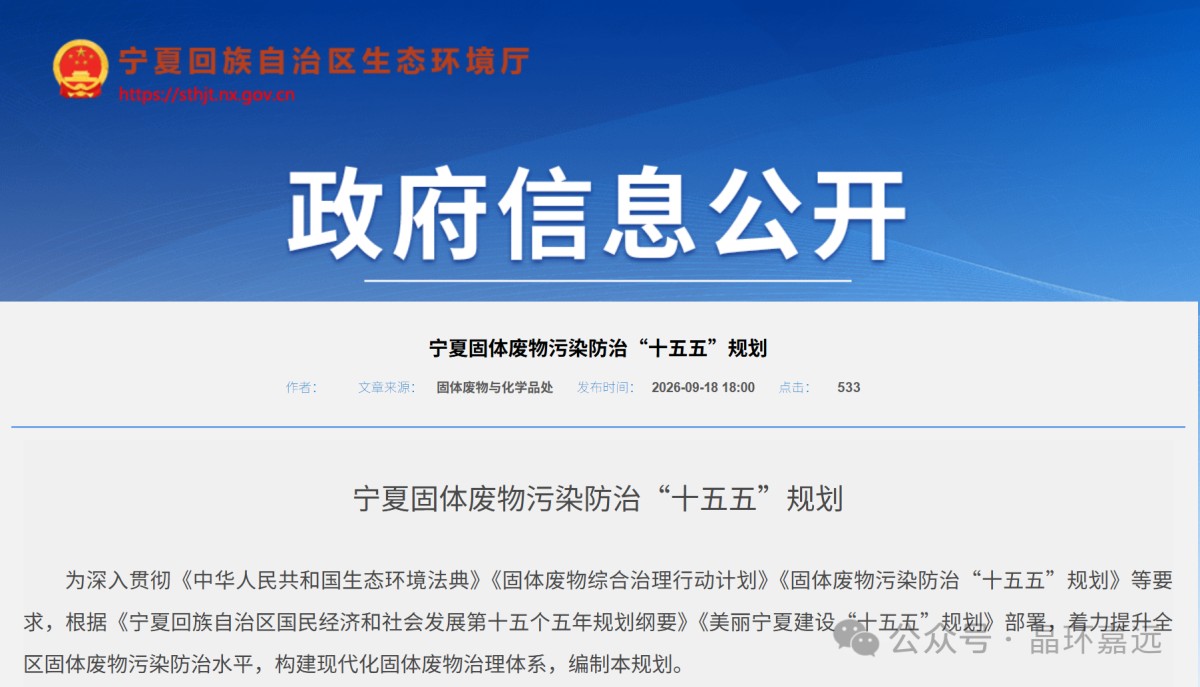
15th Five-Year Plan for the Prevention and Control of Solid Waste Pollution in Ningxia
To thoroughly implement the Ecological and Environmental Code of the People's Republic of China, the Action Plan for Comprehensive Solid Waste Management, the 15th Five-Year Plan for the Prevention and Control of Solid Waste Pollution, and other requirements, and in accordance with the Outline of the 15th Five-Year Plan for National Economic and Social Development of the Ningxia Hui Autonomous Region and the 15th Five-Year Plan for Building a Beautiful Ningxia, this Plan has been formulated to improve the region's capacity to prevent and control solid waste pollution and establish a modern solid waste management system. I. Overall Requirements Guided by Xi Jinping Thought on Socialism with Chinese Characteristics for a New Era, thoroughly implement the guiding principles of the 20th National Congress of the Communist Party of China and all plenary sessions of the 20th Central Committee, resolutely implement Xi Jinping Thought on Ecological Civilization and the spirit of General Secretary Xi Jinping's important speech during his inspection of Ningxia, and fully implement the work arrangements of the 13th Party Congress of the Autonomous Region and all plenary sessions of the 13th Party Committee. With fostering a strong sense of community for the Chinese nation as the main theme and building a pilot zone for ecological conservation and high-quality development in the Yellow River Basin as the driving force, focus on preventing and controlling environmental risks throughout the entire solid waste lifecycle. Adhere to the principles of reduction, resource recovery, and harmless treatment; implement comprehensive solid waste management initiatives; further advance special campaigns in key areas; and establish a comprehensive solid waste management system covering source reduction, process control, end-of-pipe utilization, and harmless management throughout the entire chain. By 2030, special campaigns in key areas will have achieved notable results; all entities involved in hazardous waste will be covered by information-based supervision throughout the entire process; environmental risks from hazardous waste will be effectively controlled; the capacity and level of comprehensive solid waste management will have improved across the board; and the solid waste information-based “one-network” supervision system will cover all key areas. II. Steadily Improve the Management of Industrial Solid Waste (1) Strengthen full-chain supervision of industrial solid waste. Strengthen constraints under ecological and environmental zoning control, and strictly review and approve environmental impact assessment documents. For new projects that generate large quantities of industrial solid waste, have limited disposal options, or lack clear comprehensive utilization plans, strictly control environmental access. Promote the inclusion of entities with significant environmental pollution risks from industrial solid waste under key management in pollutant discharge permits, and specify requirements for storage, utilization, and disposal. Strengthen information-based supervision of industrial solid waste, reinforce the responsibility of generating entities to submit declarations, standardize industrial solid waste ledger management, and strengthen alignment between industrial solid waste management ledgers, environmental management ledgers of pollutant discharging entities, ecological environment statistics, and the unified information reporting forms for pollutant discharge permits. (2) Standardize environmental supervision of the comprehensive utilization of industrial solid waste. Subject to compliance with environmental quality standards, pollution risk control requirements, and work safety requirements, support the large-scale consumption and utilization of bulk industrial solid waste through underground backfilling, mine-pit backfilling, ecological restoration, and other methods, and support high-value utilization projects to improve comprehensive utilization. Implement pilot projects for ecological restoration of mine pits and subsidence areas using coal-based solid waste, and reduce the storage and landfilling of bulk industrial solid waste. Encourage industrial kilns, including cement and steel kilns, to co-process low-value industrial solid waste; strengthen controls on emissions of toxic and hazardous substances; and promote compliant and efficient utilization and disposal of low-value industrial solid waste. (3) Conduct inspections and remediation of industrial solid waste storage sites. Strengthen environmental management of industrial solid waste storage sites throughout the region, focusing on environmental risks at storage sites for coal gangue, fly ash, gasification slag, smelting slag, and other industrial solid waste, and ensure that identified problems are properly rectified. Establish basic information records and issue ledgers for legacy industrial solid waste storage sites, develop a “one site, one plan” remediation plan, and advance remediation and upgrading. By the end of 2030, complete remediation of more than 60% of legacy industrial solid waste storage sites. Key Project 2: Industrial Solid Waste Management Advance pilot projects in Lingwu City, Huinong District, and other locations for ecological restoration of mine pits and coal-mining subsidence areas using coal-based solid waste. Implement projects for coal gangue backfilling, harmless treatment and comprehensive resource utilization of electrolytic manganese slag, dewatering and drying of gasification fine slag and its comprehensive utilization, and separation and resource utilization of concentrated brine. Advance analysis of the current status and trends in general industrial solid waste management, and implement projects for remediation of legacy industrial solid waste, expansion and closure of slag yards, and other purposes. III. Strictly Supervise Hazardous Waste Throughout the Entire Process (4) Advance intelligent, digital supervision of hazardous waste throughout the entire process. Upgrade the Ningxia Dynamic Supervision Information System for Hazardous Solid Waste, and require entities involved in hazardous waste to upgrade and retrofit intelligent monitoring equipment. Promote standardized implementation of the “Five Immediate Steps” at hazardous waste generating entities: immediate generation, packaging, weighing, coding, and warehousing. Establish information-based supervision that integrates information flows and waste flows through a traceable, real-time “one-code-throughout” system covering hazardous waste generation, storage, transportation, utilization, and disposal. Work toward information-based supervision throughout the entire process for all entities involved in hazardous waste across the region, establishing a closed-loop, full-chain supervision system. By 2030, the information supervision system for the entire hazardous waste process will be further improved. (5) Improve hazardous waste collection, utilization, and disposal capacity. Improve the hazardous waste collection system, deepen pilot collection programs for hazardous waste from small and micro enterprises, encourage local utilization and disposal of hazardous waste, and optimize approval procedures for interprovincial transfers of hazardous waste. Assess the match between hazardous waste generation and utilization and disposal capacity across the region; optimize the structure and layout of hazardous waste utilization and disposal capacity; strengthen coordination between environmental impact assessment and the approval of hazardous waste operating permits; address structural overcapacity; and advance designated “point-to-point” utilization of hazardous waste. Continue to improve the medical waste collection and transport network, strengthen emergency disposal capacity, strictly implement the electronic transfer manifest system for medical waste, promote centralized harmless disposal of medical waste, and improve collection and transport efficiency. (6) Strengthen environmental risk control for hazardous waste. Continue implementing tiered and classified control of hazardous waste and standardized environmental management assessments. Establish joint environmental risk prevention and control mechanisms with neighboring provinces and regions, and jointly combat environmental violations and crimes involving hazardous waste. Strictly limit direct landfilling of hazardous waste that can be reduced through resource recovery, incineration, or other treatment methods. Guide cement kilns co-processing hazardous waste to prioritize waste that is stored or landfilled in large quantities and belongs to a single category. Encourage resource recovery from low-value hazardous waste, such as municipal solid waste incineration fly ash and waste salt, following harmless pretreatment, thereby reducing the proportion of hazardous waste disposed of by landfilling. Investigate and remediate environmental risks and hazards associated with hazardous waste, implement category-specific measures and remediation, and, in accordance with the law, phase out hazardous waste utilization and disposal facilities that still cannot operate in stable compliance after retrofitting. Key Project 3: Hazardous Waste Management Implement projects for high-value comprehensive utilization of hazardous waste together with general solid waste, comprehensive utilization of electrolytic aluminum solid waste, comprehensive utilization of secondary resources, and resource recovery from hazardous waste. Complete a comprehensive hazardous waste (including medical waste) utilization and disposal center project. IV. Prevent and Control Pollution from Waste Electrical and Electronic Products and Retired New Energy Equipment (7) Strengthen environmental supervision of waste electrical and electronic products. Standardize the recycling and treatment of waste electrical and electronic products and ensure pollution control requirements are implemented. Conduct regular on-site inspections and full-process supervision of dismantling enterprises to ensure that compliant treatment capacity operates steadily, and strengthen investigations and remediation of illegal disposal. Plan treatment facilities for waste electrical and electronic products as a whole and allocate treatment capacity appropriately. Promote the implementation of extended producer responsibility by electrical and electronic product manufacturers, including participation in the development of recycling networks and sorting and utilization facilities. (8) Strengthen environmental supervision of retired new energy equipment. Strengthen source management of emerging solid waste, including waste photovoltaic modules, waste wind turbine blades, and waste traction batteries. Carry out special joint law enforcement campaigns to standardize the recycling and utilization of used traction batteries, as well as special campaigns to address the illegal recycling and dismantling of end-of-life motor vehicles. Support research and development of intelligent dismantling and high-value utilization technologies for retired new energy equipment. Implement extended producer responsibility for traction batteries and new energy vehicles, and encourage photovoltaic and wind power stations to sell retired new energy equipment to comprehensive utilization enterprises. Key Project 4: Management of Waste Electrical and Electronic Products and Retired New Energy Equipment Strengthen review of dismantling and treatment of waste electrical and electronic products, and implement projects for recycling retired wind turbine blades, resource recovery from lithium batteries, recycling and reuse of dismantled waste photovoltaic and wind power equipment, and dismantling and recycling of end-of-life vehicles. V. Prevent and Control Solid Waste Pollution in the Municipal, Construction, Agricultural, and Other Sectors (9) Strengthen the prevention and control of municipal solid waste pollution. Investigate and address environmental pollution risks at municipal solid waste landfills, establish risk and hazard ledgers, reasonably assess the environmental pollution risk level of each landfill, and implement classified remediation under a “one site, one plan” approach. Accelerate the safe treatment of accumulated leachate and effective control of landfill gas emissions, and improve leachate collection and treatment capacity at municipal solid waste landfills. Promote the pilot model of small-scale, decentralized incineration of municipal solid waste in remote towns and villages in Yanchi County. Strengthen environmental supervision of municipal solid waste incineration power plants, encourage technologies such as returning incineration fly ash to the furnace to reduce its volume, control the growth of incineration fly ash at source, and enable resource recovery. Increase the resource utilization rate of urban municipal solid waste to more than 75% by 2030. (10) Strengthen the prevention and control of construction waste pollution. Continue special campaigns to address construction waste and effectively prevent and control illegal and non-compliant activities involving construction waste. Strengthen operation and management of construction waste utilization and disposal facilities, and strictly implement pollution prevention and control measures in accordance with relevant standards. Comprehensively investigate and assess pollution from existing construction waste. Promptly implement pollution control and remediation at temporary storage facilities that pose environmental risks or have caused environmental pollution, promote the standardized establishment of construction waste storage sites, and collect construction waste by category. Encourage the use of construction waste for earthwork balancing, forestry soil, environmental remediation, sintered products, backfilling, and other purposes, and improve comprehensive construction waste utilization capacity. Increase the comprehensive utilization rate of urban construction waste to more than 80% by 2030. (11) Strengthen the prevention and control of pollution from sludge at urban wastewater treatment plants. Strengthen supervision of sludge throughout the entire treatment and disposal process, and implement a tracking system for sludge transport manifests. Gradually restrict sludge landfilling and actively adopt alternative treatment options, including resource recovery. Improve sludge treatment and disposal capacity, and encourage municipal solid waste incineration plants, thermal power plants, cement kilns, and other facilities to co-incinerate sludge, provided they operate safely and stably. (12) Strengthen the prevention and control of agricultural solid waste pollution. Promote diversified utilization of crop straw, strengthen environmental supervision of utilization and disposal processes, and strengthen controls on open burning in accordance with the law. Promote resource recovery from livestock and poultry manure, support the development of facilities for its harmless treatment and resource recovery, and strengthen odor pollution control. Include waste agricultural mulch film with no reuse value in coordinated collection and disposal systems for urban and rural municipal solid waste, and strengthen monitoring of residual mulch film in farmland. Improve the recycling and treatment system for pesticide packaging waste, and standardize resource recovery and disposal. By 2030, the recovery and utilization rate of agricultural residual mulch film, the comprehensive utilization rate of crop straw, and the resource utilization rate of livestock and poultry manure will each exceed 92%. Key Project 5: Solid Waste Management in Other Sectors 1. Municipal solid waste: Implement projects such as the construction and expansion of municipal solid waste incineration power plants in Yinchuan and Wuzhong. 2. Construction waste: Implement construction waste disposal facility projects in 10 counties, cities, and districts, including Xingqing District, Jinfeng District, and Hongsibao District, as well as construction waste resource utilization projects in Yinchuan, Yongning County, Litong District, Pengyang County, and Zhongning County. 3. Sludge from urban wastewater treatment plants: Promote the incineration and disposal of sludge. 4. Agricultural solid waste: Implement comprehensive agricultural non-point source pollution control projects in Yongning County, Yanchi County, and other locations. VI. Coordinate Supervision of Solid Waste Pollution Prevention and Control (13) Improve the quality and expand the coverage of “Zero-Waste City” development. Implement the “Ten Projects” for “Zero-Waste City” development, advance the development of “zero-waste cells,” and guide industrial parks and enterprises to reduce the intensity of industrial solid waste generation. Assess progress in “Zero-Waste City” development and improve the quality of development in Yinchuan and Shizuishan. Expand the scope of “Zero-Waste City” development and promote applications by Wuzhong, Guyuan, and other cities. By 2030, “Zero-Waste City” development will cover more than 60% of cities in the region. (14) Carry out special campaigns to address the illegal dumping and disposal of solid waste. Establish an aerial monitoring network using technologies such as satellite remote sensing and drone patrols, supplemented by grid-based ground inspections, to comprehensively investigate and address the illegal dumping and landfilling of solid waste and the illegal dismantling and disposal of discarded equipment and consumer goods, effectively curbing the high incidence of illegal solid waste dumping and disposal. Strengthen information sharing on solid waste, discarded equipment and consumer goods, including generation data, intended uses and quantities, transport vehicles, disposal data, and illegal cases. VII. Comprehensively Improve Solid Waste Monitoring and Supervision Capacity (15) Standardize pollution discharge monitoring at storage and disposal facilities. Strengthen supervisory monitoring and self-monitoring oversight of solid waste storage and disposal facilities. Require municipal solid waste landfills and industrial solid waste storage and landfill sites to install groundwater monitoring wells in accordance with requirements and conduct regular monitoring. Include hazardous waste disposal facilities with a single incinerator capacity of less than 10,000 tonnes per year among the priorities for supervisory monitoring. Accelerate the connection of automatic pollutant discharge monitoring equipment at industrial solid waste entities subject to key management under pollutant discharge permits. Advance the installation and network connection of monitoring equipment at hazardous waste incineration and cement kiln co-processing facilities, and monitor and disclose pollutant emissions in real time. (16) Strictly enforce environmental laws and supervise solid waste management. Strengthen routine law enforcement and supervision, reinforce coordination between ecological and environmental law enforcement and the judicial authorities, including public security, procuratorates, and courts, and promote cross-departmental and cross-level information connectivity and data sharing. Build a coordinated law enforcement and judicial response to severely punish crimes and violations in the ecological and environmental field, and crack down on illegal dumping and landfilling of solid waste, illegal dismantling and disposal of retired products and equipment, and falsification by appraisal agencies. Encourage the public to pay attention to, support, and participate in solid waste pollution prevention and control. VIII. Improve the Policy Framework for Solid Waste Pollution Prevention and Control (17) Improve the laws, regulations, and standards system. Revise the Regulations of the Ningxia Hui Autonomous Region on the Prevention and Control of Environmental Pollution by Solid Waste, and advance legislation for the Administrative Measures of the Autonomous Region for Urban Construction Waste. Improve systems for reviewing hazardous waste operating permits, managing transfers, and conducting appraisals. Strengthen requirements for environmental management throughout the entire process for general industrial solid waste, and develop technical specifications for ecological restoration of mine pits and subsidence areas using coal-based solid waste. (18) Strengthen support through coordinated policies. Make coordinated use of funding from existing channels to support eligible solid waste pollution prevention and control projects. Encourage financial institutions to provide diversified financial support, including green loans and green bonds. Take into account the layout requirements for solid waste utilization and disposal facilities, and strengthen the provision of land, water, and other essential resources. Increase support for science and technology, deepen integration among industry, academia, research, and application, strengthen the professional workforce, and increase support for technological innovation and green transition in source reduction, resource recovery, and harmless disposal. Implement national plans for voluntary greenhouse gas emissions reduction trading, and encourage the development of eligible voluntary greenhouse gas emissions reduction projects in the field of solid waste resource recovery. IX. Strengthen Implementation Guarantees The Department of Ecology and Environment of the Autonomous Region shall coordinate and organize the implementation of the Plan, dynamically monitor and track progress on key indicators and tasks, conduct plan evaluations as appropriate, and coordinate the resolution of major issues arising during implementation. Relevant departments of the Autonomous Region shall carry out key tasks within their respective areas of responsibility, work toward meeting all targets, and coordinate their efforts. Cities shall assign responsibilities for targets and tasks, improve working systems, work toward meeting the Plan's indicators and key tasks, and advance the implementation of key projects in an orderly manner, ensuring effective coordination and implementation at all levels.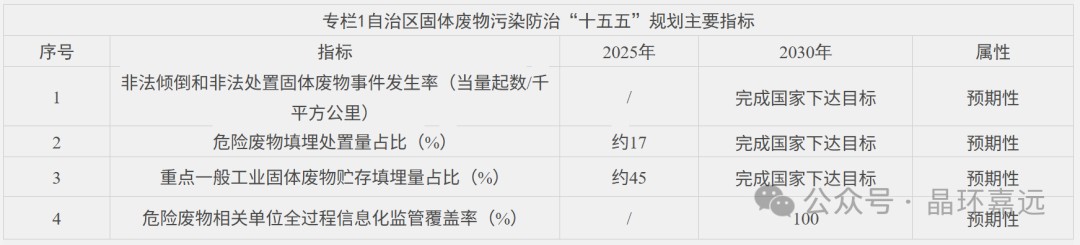
About RESOLAR
Shanghai RESOLAR Energy Technology Co., Ltd. is committed to becoming a recycled material photovoltaic group with deep decarbonization. RESOLAR focuses on technological innovation and builds a world-leading solution for component recycling, impurity removal of damaged cells, recycled silicon materials and cells, and cascaded utilization of components. With professional technology and services, we help customers realize the recycling and reuse of waste photovoltaic resources, and make positive contributions to the development of environmental protection and new energy industries. For more detailed information, you can browse the official website: www.resolartech.com .

Latest developments/news
Contact information
Service Hotline: 13585742918 (Monday to Friday 9:00-18:00)
Enterprise email: ps@resolartech.com (Reply within 48 hours after receiving the email consultation!)
Company Address: Building 8, No. 1528, Wangxu East Road, Fengjing Town, Jinshan District, Shanghai (Caohejing Fengjing Park)