


English
News Center
—— NEWS CENTER ——
To address the difficulties of issuing invoices for recycled resource recovery, input tax credits, regulatory oversight, the State Taxation Administration has vigorously promoted the reverse invoicing initiative. In many places, an integrated service of on-site settlement, invoicing upon payment, and tax payment upon invoicing has been implemented, covering areas such as waste materials and agricultural products, and providing a mature compliance template for photovoltaic recycling.
On January 3, 2025, the tax bureau of Linshu County, Linyi City, Shandong Province helped Linyi Qitai Rubber Co., Ltd. implement the “three-flow integration” reverse invoicing service locally.
On August 6, 2025, the State Taxation Administration and the tax bureau of Laixi City helped Qingdao Hailvyuan Recycling Technology Co., Ltd. issue a reverse invoice through the “three-flow integration” model.
On February 5, 2026, Jingdezhen, Jiangxi Province has already achieved the rollout of the “pay now, invoice now” model in multiple scenarios, including recycled resource recovery, agricultural product procurement, parking lots, accommodation, gas stations, and tourist attractions.
On March 3, 2026, the Zhejiang Provincial Branch of the Industrial and Commercial Bank of China focused on four key areas—recycled resources, gas stations, parking property management, and agricultural product procurement—to make precise breakthroughs and empower green development. In recycling scenarios, it leveraged the “reverse invoicing assistant” SaaS cloud product to provide convenient services of “reverse invoicing upon payment, tax payment upon invoicing, and warehousing upon tax payment,” addressing industry pain points such as difficulty for individuals to issue invoices and enterprises’ lack of input vouchers. It has already been implemented in Jiaxing, Shaoxing, Quzhou, Lishui, and other places, serving many county-level resource recovery and manufacturing enterprises. For example, the Jiaao Environmental Protection project of a listed company in Jiaxing is expected to issue invoices worth more than RMB 70 million, accelerating the extension of financial services into the recycled resources industrial chain.
On March 20, 2026, the State Taxation Administration issued the “Opinions of the State Taxation Administration on Launching the 2026 ‘Convenience Tax Services Spring Breeze Action’” (Taxation General Operations Letter [2026] No. 18), which mentioned promoting the building of a co-governance ecosystem. It will accelerate the promotion of the “joint operation” model of Leqi, focusing on third-party payment institutions with strong compliance capabilities, strong information technology capabilities, and broad market coverage, and attracting more high-quality entities to participate in the construction of the tax information ecosystem. It will expand the application scenarios of “payment upon invoicing,” promoting further extension from high-frequency livelihood areas such as parking lots, supermarket retail, agricultural product procurement, waste recovery, catering and accommodation, cultural tourism and entertainment, and transportation, connecting payment and invoicing, improving the invoicing and receipt experience of business entities and consumers, and driving the digital transformation of the economy and society. It will carry out publicity on compliant operations and positive cases of honest tax compliance, demonstrate the positive role compliant operations bring to enterprise development, and foster a good social atmosphere of honest operations and fair competition. It will continue to expose typical tax-related violations, release a strong signal of handling tax-related illegal acts in accordance with the law and cracking down strictly, and guide enterprises to firmly establish the concept of tax compliance and compliant operations. In March 2026, the State Taxation Administration and the Dezhou Municipal Taxation Bureau of Shandong Province launched the “promoting ‘pay now, invoice now’ scenario application” project. At present, the “pay now, invoice now” model is mainly used in agricultural product procurement and recycled resource recovery, and is intended to solve pain points such as difficulty for natural persons to issue invoices when selling agricultural products and waste materials, low efficiency, and high risk.
On April 2, 2026, at a press conference held by the Information Office of the People’s Government of Zibo City, the rollout results of “transaction upon invoicing” were introduced. The “three-flow integration reverse invoicing” model is mainly applied in the fields of recycled resource recovery and agricultural product procurement. It has now been fully promoted, with 70% of eligible recycled resource recovery enterprises applying, and 75.82% of agricultural product procurement enterprises applying.
On April 13, 2026, the Guizhou branch of ICBC successfully reached cooperation on reverse invoicing business with a recycled resource recovery company in Guizhou. The branch fully leveraged the product advantages of the reverse invoicing assistant—“zero cost, low threshold, high efficiency”—and, with the guidance of a dedicated service team throughout the process, covering natural person real-name registration, enterprise operator order placement, natural person QR code scanning to verify orders, enterprise finance performing U-shield verification and payment, and online invoice download, it achieved a full closed loop of transaction, payment, invoicing, and reporting, delivering a one-stop convenient experience for recycled resource recovery enterprises to “pay now, invoice now.”
On May 6, 2026, the Wuzhou Branch of ICBC Guangxi made an important breakthrough in reverse invoicing business for recycled resource recovery scenarios. In the past, in the trading scenarios of agricultural by-products and recycled resources, enterprises and individuals commonly faced problems such as difficulty obtaining invoices, difficulty with VAT input deductions, and inconvenience for natural persons to issue invoices, while enterprises faced tax risks and natural persons lacked motivation to issue invoices. To address these pain points, the Wuzhou Branch of ICBC created a comprehensive service solution of “fund settlement + reverse invoicing + dedicated financial services” for enterprises, enabling one-stop payment, invoicing, and reconciliation services and improving settlement and reconciliation efficiency.
On May 13, 2026, the Zhejiang Branch of the People’s Bank of China will deeply extend the “pay now, invoice now” service into the four key areas of gas stations, parking property management, agricultural product procurement, and recycled resources, achieving empowerment across the entire scenario. Through cooperation with local supply and marketing cooperatives and resource recovery enterprises, it has created a digital financial model integrating “financing + payment + invoicing.”
On May 14, 2026, the Wuxi Branch of ICBC has widely applied the “pay now, invoice now” model in recycled resource recovery enterprises, gas stations, and supermarkets in Wuxi.
On May 20, 2026, Shandong Linyi Huadong Metal City and the Shandong Provincial Branch of ICBC held discussions to deepen business cooperation on “pay now, invoice now.” The web finance department of the Shandong Provincial Branch of ICBC, led by senior manager Teng Haiyang, visited Linyi Huadong Metal City to carry out specialized business exchanges centered on digital transformation in the recycled resources recovery industry, with a focus on deepening innovative financial services for “pay now, invoice now” to help improve quality and efficiency in the metal recycling market and summarize progress in standardized development. At present, the “pay now, invoice now” business of Huadong Metal City is being fully piloted and promoted among merchants in the park.
On May 25, 2026, Hubei Jingxiang New Materials Co., Ltd. is a recycled resource recovery enterprise in Tianmen City. Its daily operations require carrying out recycled resource procurement business with individuals, and it has long faced common industry issues such as upstream individuals being unable to issue invoices, insufficient enterprise input deductions, and high financial management costs. Since the “three-flow integration reverse invoicing” scenario went online, the company has actively cooperated in completing scenario application. By directly connecting the electronic invoice service platform with the payment system, it has realized full-process digitization of “enterprise displaying the code, individual scanning the code, automatic tax calculation, and instant invoicing,” effectively solving the pain point of difficulty in issuing invoices in the procurement process of the recycled resources industry. “In the past, when purchasing scattered recycled resources from individuals, we had to repeatedly communicate about invoicing matters, which was not only inefficient but also carried compliance risks. Now, through the ‘three-flow integration’ reverse invoicing function, scanning the code triggers invoicing, payment instantly completes tax payment, and the capital flow, invoice flow, and personnel flow automatically match and remain consistent. This not only reduces tax-handling costs, but also avoids tax-related risks,” said a financial manager of Jingxiang New Materials with emotion. According to enterprise feedback, as of now, the company has completed the issuing of invoices for multiple natural person procurement transactions through the “three-flow integration” reverse invoicing function, with cumulative invoiced amount reaching RMB 100,000. This not only solved the problem of missing input invoices, but also greatly simplified the financial accounting process and achieved full-process transaction traceability.
On June 8, 2026, after selling kitchen waste oil and other waste oil generated by the restaurant to郭记草根老火锅店 in Jiulongpo District, Chongqing, the restaurant logged into the “Food Service Safety Online” platform to verify the relevant information, and the system automatically issued a VAT ordinary electronic invoice, marking the implementation of the “pay now, invoice now” function for kitchen waste oil in Chongqing.Food service enterprises only need to register on the “Food Service Safety Online” platform and open a waste oil account to conduct transactions and issue invoices with the kitchen waste oil collection and transportation enterprises on the platform. After payment is completed, the transaction information is automatically synchronized in real time to the tax bureau’s “Leqi” platform, which automatically issues a VAT digital electronic invoice and transmits the invoice to the “Food Service Safety Online” platform for download by the kitchen waste oil collection and transportation enterprise.As of July 10, more than 1,000 merchants have joined the platform.
On July 9, 2026, Fujian ICBC officially announced that, relying on the head office’s “Rong e Ju” digital platform, it successfully launched the province’s first reverse invoicing platform business in the 3C circular economy industrial park project in Sanming City for the electronics recycled resources sector. The 3C electronics recycled resources reverse invoicing platform officially went online in late May 2026. Since the project went online, the overall operating trend has been good. By the end of June, 7 enterprises had settled in the Sanming 3C circular economy industrial park, 3 enterprises had successfully gone online for transactions, and the monthly reverse invoicing amount exceeded RMB 1.38 million. As more enterprises choose to settle in, the platform’s overall transaction volume in 2026 is expected to exceed RMB 100 million, showing strong industry development potential.
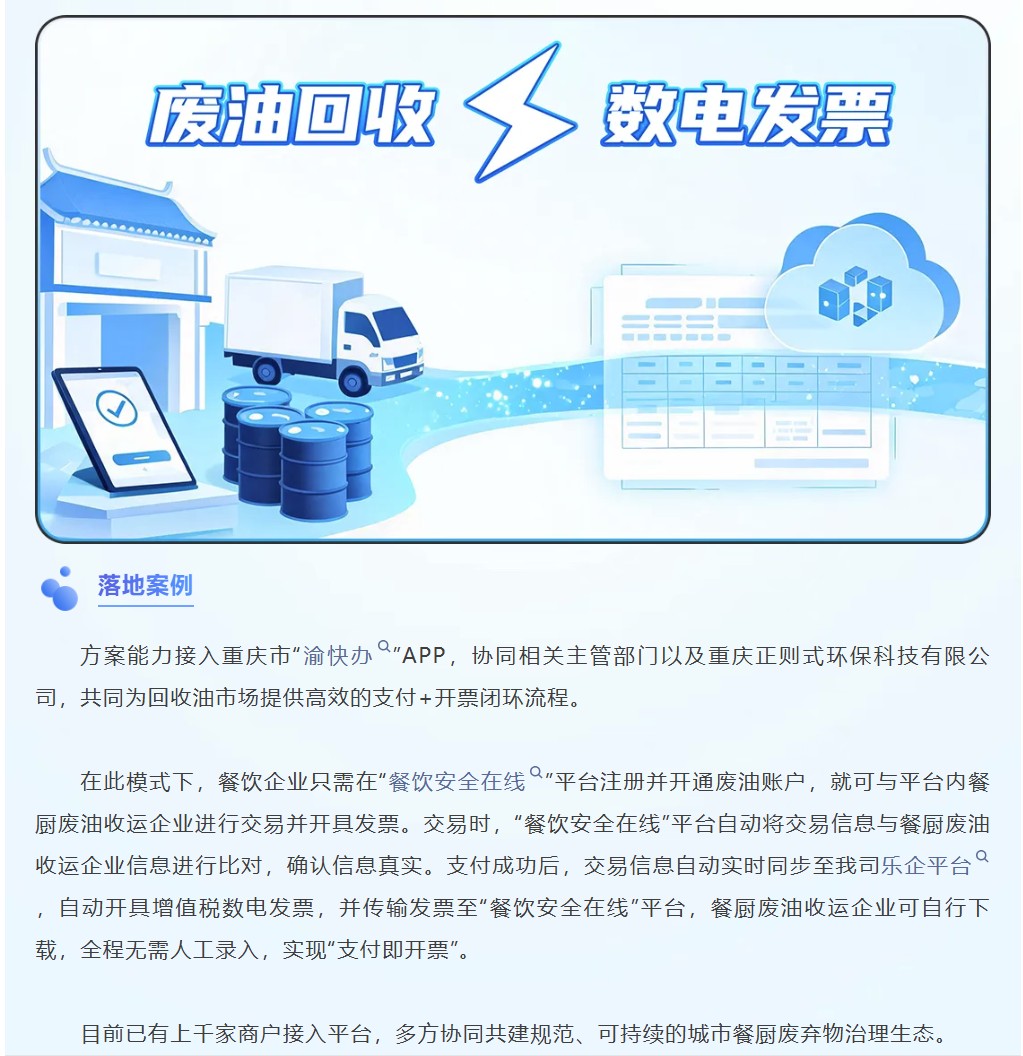
On July 2, the “Five-Flow Integration” reverse invoicing product system of Zihuan Lianjin was officially connected to the Industrial and Commercial Bank of China’s “Three-Flow Integration” reverse invoicing service, successfully launching the first Leqi platform reverse invoicing issued after cooperation between both parties.
About RESOLAR
Shanghai RESOLAR Energy Technology Co., Ltd. is committed to becoming a recycled material photovoltaic group with deep decarbonization. RESOLAR focuses on technological innovation and builds a world-leading solution for component recycling, impurity removal of damaged cells, recycled silicon materials and cells, and cascaded utilization of components. With professional technology and services, we help customers realize the recycling and reuse of waste photovoltaic resources, and make positive contributions to the development of environmental protection and new energy industries. For more detailed information, you can browse the official website: www.resolartech.com .

Latest developments/news
Contact information
Service Hotline: 13585742918 (Monday to Friday 9:00-18:00)
Enterprise email: ps@resolartech.com (Reply within 48 hours after receiving the email consultation!)
Company Address: Building 8, No. 1528, Wangxu East Road, Fengjing Town, Jinshan District, Shanghai (Caohejing Fengjing Park)