


English
News Center
—— NEWS CENTER ——
On November 6, 2026, the Shanxi Provincial Department of Ecology and Environment issued the Notice on Issuing the 15th Five-Year Plan for the Prevention and Control of Solid Waste Pollution in Shanxi Province (Jin Huan Fa [2026] No. 21), which states:
Strengthen environmental management of decommissioned new energy equipment. Strengthen source control over waste generation from decommissioned new energy equipment, and strictly control pollution during the recycling and treatment of waste power batteries, decommissioned wind power equipment, waste photovoltaic modules, and other items. Promote the fulfillment of extended producer responsibility for power batteries and new energy vehicles, and encourage photovoltaic and wind power stations to sell decommissioned new energy equipment to comprehensive utilization enterprises. Support the development of comprehensive utilization facilities for decommissioned new energy equipment and increase their utilization capacity.
Strengthen environmental law enforcement and coordinated supervision. Improve joint cross-departmental and cross-regional law enforcement and supervision mechanisms, as well as mechanisms linking administrative enforcement with criminal justice, and strengthen analysis of data from multiple sources and non-site enforcement. In accordance with the law, crack down severely on illegal dumping and disposal, illegal cross-provincial transfer and disposal of hazardous waste, illegal dumping and disposal of solid waste, illegal dismantling and treatment of discarded equipment, and fraud in identification and testing. Strengthen the tracing of violations and the accountability of those responsible. Make coordinated use of all types of baseline data to identify clues to hazardous waste violations accurately. Expand channels for collecting information on violations and improve the reward system for reporting violations of ecological and environmental laws. Strengthen routine enforcement and supervision, implement tiered and category-based supervision, and improve the precision and coordination of enforcement.
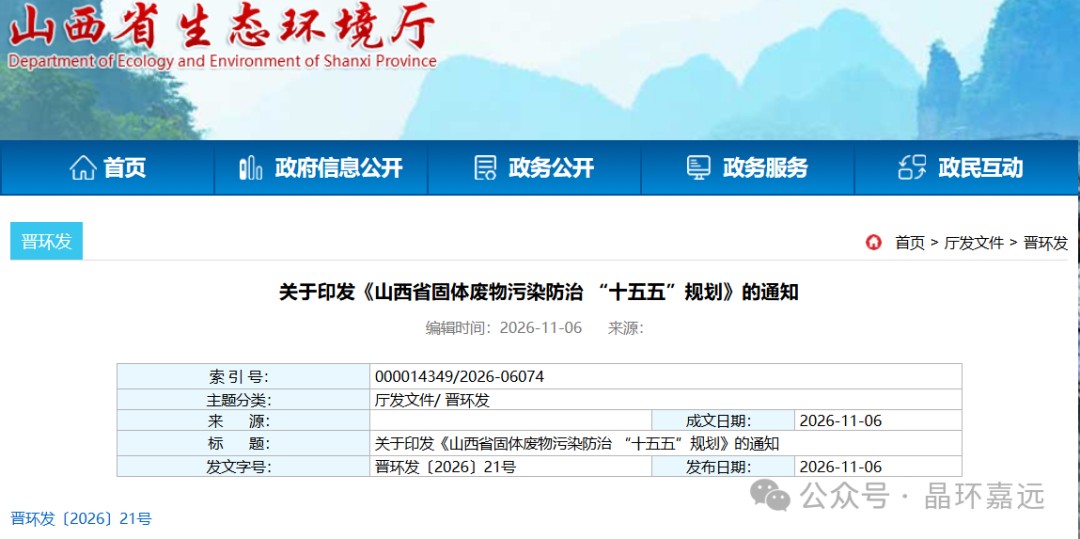
Jin Huan Fa [2026] No. 21
Notice on Issuing the 15th Five-Year Plan for the Prevention and Control of Solid Waste Pollution in Shanxi Province
Ecology and Environment Bureaus, Development and Reform Commissions, Industry and Information Technology Bureaus, Housing and Urban-Rural Development Bureaus, Agriculture and Rural Affairs Bureaus, and Commerce Bureaus of all cities: To implement the decisions and arrangements of the Provincial Party Committee and the Provincial Government, and to comprehensively and systematically strengthen the prevention and control of solid waste pollution, the Provincial Department of Ecology and Environment, the Provincial Development and Reform Commission, the Provincial Department of Industry and Information Technology, the Provincial Department of Housing and Urban-Rural Development, the Provincial Department of Agriculture and Rural Affairs, and the Provincial Department of Commerce have prepared the 15th Five-Year Plan for the Prevention and Control of Solid Waste Pollution in Shanxi Province. It is hereby issued to you. Please organize its implementation carefully in light of local conditions. Shanxi Provincial Department of Ecology and Environment Shanxi Provincial Development and Reform Commission Shanxi Provincial Department of Industry and Information Technology Shanxi Provincial Department of Housing and Urban-Rural Development Shanxi Provincial Department of Agriculture and Rural Affairs Shanxi Provincial Department of Commerce October 29, 2026 (This document is publicly disclosed on a voluntary basis.) 15th Five-Year Plan for the Prevention and Control of Solid Waste Pollution in Shanxi Province Strengthening the prevention and control of solid waste pollution is an important task in building a Beautiful Shanxi in all respects. To implement the requirements of the Ecological and Environmental Code of the People's Republic of China, the Action Plan for Comprehensive Solid Waste Management, the 15th Five-Year Plan for the Prevention and Control of Solid Waste Pollution, and other relevant documents, and to carry out the arrangements set out in the Outline of the 15th Five-Year Plan for National Economic and Social Development of Shanxi Province and the 15th Five-Year Plan for Building a Beautiful Shanxi, this Plan is formulated to comprehensively improve the prevention and control of solid waste pollution in Shanxi Province. I. Overall Requirements Guided by Xi Jinping Thought on Socialism with Chinese Characteristics for a New Era, we will fully implement the guiding principles of the 20th National Congress of the Communist Party of China and all plenary sessions of the 20th CPC Central Committee, earnestly implement the arrangements of the Fourth Plenary Session of the 20th CPC Central Committee, and put Xi Jinping Thought on Ecological Civilization into practice. We will fully implement the important speeches and instructions of General Secretary Xi Jinping on Shanxi's work, and carry out the strategy for ecological conservation and high-quality development in the Yellow River Basin and the decisions and arrangements of the Provincial Party Committee and the Provincial Government. We will uphold the principles of reduction, resource recovery, and harmlessness; focus on preventing and controlling environmental risks throughout the entire solid waste life cycle; prioritize coal-based bulk industrial solid waste and red mud; address prominent issues such as legacy stockpiles and illegal dumping and disposal; strengthen solid waste pollution prevention and control; improve comprehensive solid waste management capacity and environmental supervision; reinforce the ecological security barrier in the middle reaches of the Yellow River and northern China; and support the development of a Beautiful Shanxi. By 2030, source reduction, comprehensive utilization, and pollution prevention and control of solid waste will have steadily improved, and special rectification in key areas will have achieved notable results. Legacy stockpiles and environmental risks will be effectively controlled, and the frequent occurrence of illegal dumping and disposal will be curbed. A comprehensive solid waste management system based on source reduction, process control, end-use utilization, and harmless management throughout the entire chain will have largely taken shape. Information-based supervision will cover all key areas, a number of “Zero-Waste Cities” will have been established, and the solid waste management system and capacity will continue to improve. II. Focus on Improving the Prevention and Control of Industrial Solid Waste Pollution (1) Strictly control industrial solid waste at source. Implement ecological and environmental zoning controls and environmental access requirements for construction projects. Strengthen controls on projects that generate large amounts of solid waste or are difficult to utilize or dispose of, coordinate source controls in industrial parks with utilization and disposal capacity, and strictly implement pollution prevention and control measures and utilization and disposal requirements. Eliminate outdated production capacity in accordance with laws and regulations. Deepen cleaner production audits in the coal, power, metal smelting, and other industries, and promote the upgrading of processes and equipment and waste reduction during production. Include entities with significant environmental pollution risks from industrial solid waste in the key management scope of pollutant discharge permits, and specify requirements for the storage, utilization, and disposal of industrial solid waste. (2) Regulate the collection and storage of industrial solid waste. Strengthen the primary responsibility for pollution prevention and control at every stage of industrial solid waste generation, collection, storage, and transportation. Implement systems for separate collection, standardized storage, and managed outsourcing of transport. Strengthen the standardized construction and operation management of storage facilities to prevent mixed piling and discharge, dispersal and loss, and leakage pollution. Industrial solid waste must not be placed in household waste collection facilities. Strictly implement the management system for the cross-provincial transfer of industrial solid waste, and promote standardized coordination between generating entities and utilization and disposal entities. (3) Strengthen pollution control during the resource recovery and utilization of industrial solid waste. Promote the separate and classified utilization of coal gangue, fly ash, coal gasification slag, desulfurization gypsum, and other materials. Strictly implement pollution prevention and control requirements and product quality standards, and strengthen pollution control during resource recovery and utilization processes such as raw material substitution, materials production, and extraction of valuable components. Strengthen the use of the calorific value of industrial solid waste and its coordinated utilization and disposal in industrial kilns, and strictly control emissions of toxic and hazardous substances. Promote the application of suitable technologies for iron recovery from red mud, building materials production, and other uses, and carry out harmless pretreatment of red mud that cannot yet be utilized. (4) Strengthen environmental risk prevention and control during the filling and backfilling of industrial solid waste. Promote the filling and backfilling of coal gangue and fly ash in a prudent and orderly manner, implement project approval and supervision requirements, ensure access to the factors needed for projects, and strengthen pollution control and environmental management during large-scale consumption and utilization. Establish mechanisms for tracking and assessing environmental outcomes and for long-term monitoring to prevent soil, groundwater, and other environmental pollution caused by non-standard filling and backfilling. (5) Improve environmental management of industrial solid waste storage sites. Standardize the operation and management of active industrial solid waste storage sites. Strictly implement pollution control standards for the storage and landfilling of general industrial solid waste, and strengthen seepage prevention, leachate collection and treatment, and dust pollution control to prevent environmental pollution and ecological damage. Standardize closure and remediation of decommissioned stockpile sites, and ensure post-closure monitoring, facility maintenance, and the transfer of responsibilities. III. Strengthen Environmental Supervision Throughout the Entire Hazardous Waste Life Cycle (6) Strengthen information-based supervision of hazardous waste. Promote standardized development of “Five Immediate” hazardous waste management and “one-code integration,” enabling real-time, traceable, information-based supervision throughout the entire process of generation, storage, transfer, utilization, and disposal. Encourage enterprises to upgrade and renovate digital and intelligent monitoring equipment, strengthen connectivity and application of information systems and data quality management, and optimize standardized assessment models and differentiated supervision. By 2028, apply data from the hazardous waste life-cycle environmental management information system to ecological and environmental statistics, in accordance with national requirements. By 2030, achieve 100% coverage of life-cycle information-based supervision for entities associated with hazardous waste. (7) Standardize the collection and transfer of hazardous waste. Improve hazardous waste collection systems for small and micro enterprises, optimize separate collection of industrial and social-source waste, and improve entry and exit mechanisms. Standardize the receipt, storage, utilization, and disposal operations of comprehensive hazardous waste operators to prevent disorderly transfers. Establish a negative list system for cross-provincial hazardous waste transfers, subject comprehensive operators with serious environmental violations to key supervision, and link this supervision with cross-provincial transfer approvals. Improve the centralized collection system for medical waste and strictly implement the transfer manifest system. Support appropriate collection and disposal methods in remote areas to ensure standardized collection of medical waste from small healthcare facilities. (8) Improve the capacity and performance of hazardous waste utilization and disposal. Encourage eligible industrial parks to build supporting utilization and disposal facilities, and promote the shared use of hazardous waste utilization and disposal facilities within parks and large enterprise groups. Encourage “point-to-point” targeted utilization of recoverable hazardous waste. Promote comprehensive utilization of low-value hazardous waste, such as municipal solid waste incineration fly ash and waste salt, following harmless pretreatment. Improve medical waste disposal capacity, encourage the deployment of backup medical waste disposal facilities, and dynamically improve the emergency response support system for medical waste generated during public health emergencies. (9) Strengthen environmental risk control for hazardous waste. Strictly regulate hazardous waste operating permits, strengthen supervision before, during, and after operations, and improve coordination with systems such as pollutant discharge permits and environmental impact assessments. Strictly control direct landfilling of hazardous waste that can be utilized or incinerated, and gradually reduce the proportion disposed of by landfilling. Regulate the self-utilization and disposal of hazardous waste by generating entities, and strengthen hazardous waste identification management. Promote performance-based classification and upgrading of hazardous waste utilization and disposal facilities, and eliminate facilities with outdated disposal processes and technologies or low levels of resource recovery and utilization in accordance with the law. Strengthen control over hazardous waste transfers and improve emergency response and handling capacity for hazardous waste-related environmental incidents. IV. Actively Prevent and Control Pollution from Waste Electrical and Electronic Products and Decommissioned New Energy Equipment (10) Strengthen environmental management of waste electrical and electronic products. Coordinate the layout of recycling networks and treatment capacity for waste electrical and electronic products, and address gaps in standardized treatment capacity in northern, central, and other parts of the province. Strengthen environmental supervision of enterprises that recycle and dismantle waste electrical and electronic products, and regulate the recycling and treatment of electronic waste not covered by the Catalogue of Waste Electrical and Electronic Products for Treatment. (11) Strengthen environmental management of decommissioned new energy equipment. Strengthen source control over waste generation from decommissioned new energy equipment, and strictly control pollution during the recycling and treatment of waste power batteries, decommissioned wind power equipment, waste photovoltaic modules, and other items. Promote the fulfillment of extended producer responsibility for power batteries and new energy vehicles, and encourage photovoltaic and wind power stations to sell decommissioned new energy equipment to comprehensive utilization enterprises. Support the development of comprehensive utilization facilities for decommissioned new energy equipment and increase their utilization capacity. Key Project 1 Solid Waste Utilization and Disposal Projects Large-scale consumption and utilization of coal-based solid waste. Focusing on coal-producing counties, support the large-scale consumption and utilization of coal-based solid waste, and advance the implementation of a number of coal gangue and fly ash resource recovery and utilization and filling and backfilling projects. Promote standardized implementation and environmental performance assessment of ecological backfilling and regional ecological restoration pilot projects for coal-based solid waste in six localities in Lüliang City: Lishi, Xiaoyi, Zhongyang, Liulin, Linxian, and Xingxian. Standardized treatment of waste electrical and electronic products. In response to regional demand, support the construction of one to two facilities for recycling and treating waste electrical and electronic products in northern, central, and other parts of the province. Remediation of legacy stockpile sites and key storage sites. Focus on remediation of stockpiles of legacy coal gangue, fly ash, red mud, and other materials, and complete remediation of more than 60% of legacy industrial solid waste storage sites. Complete the investigation and remediation of environmental risks at red mud storage facilities and tailings ponds, and provide supporting monitoring and long-term maintenance facilities. V. Comprehensively Strengthen the Prevention and Control of Solid Waste Pollution in Household, Construction, Agricultural, and Other Sectors (12) Strengthen pollution prevention and control for household waste and municipal sludge. Strengthen environmental supervision of household waste incineration power plants, and ensure that new household waste incineration projects make provision for fly ash treatment at the same time. Strengthen the collection and treatment of leachate and landfill gas at household waste landfills, and standardize their operation and closure management. Strengthen supervision and management of pollution prevention and control throughout the entire municipal sludge life cycle, and implement a tracking system using transfer manifests for sludge. Encourage the use of diversified, combined treatment methods for sludge, promote comprehensive sludge utilization and coordinated disposal in light of local conditions, and reduce the scale of sludge landfilling. (13) Strictly prevent and control construction waste pollution. Implement source separation and management of construction waste and the transfer manifest management system for construction waste. Strengthen pollution prevention and control in the utilization and disposal of construction waste, improve environmental management of the operation of utilization and disposal facilities, and require operators to establish and improve environmental monitoring systems. Investigate and assess environmental pollution at sites storing or landfilling accumulated construction waste, and implement pollution prevention and control and remediation measures. Investigate and deal with illegal dumping, unloading, and disposal. (14) Strengthen pollution prevention and control for agricultural solid waste. Vigorously promote comprehensive utilization of crop straw and strengthen controls on straw burning. Strengthen the operation and management of manure and wastewater treatment facilities at large-scale livestock and poultry farms, promote resource recovery and utilization of livestock and poultry manure, and encourage the establishment of “small-scale centralized” collection, transport, and utilization systems suited to local conditions. Improve recycling systems for agricultural film and discarded pesticide packaging, and strengthen monitoring of residual agricultural film in farmland. VI. Advance the Development of “Zero-Waste Cities” to a High Standard (15) Further promote the development of “Zero-Waste Cities.” Advance Taiyuan and Jincheng from the development phase toward becoming established “Zero-Waste Cities,” and continue development efforts in Lüliang, Datong, Shuozhou, Changzhi, Yuncheng, and other cities. Implement requirements for evaluating progress in “Zero-Waste City” development; coordinate solid waste management in the industrial, household, agricultural, and other sectors; improve mechanisms for interdepartmental coordination, regional co-development, and shared facilities; and promote coordinated implementation of source reduction, resource utilization, and pollution prevention and control tasks. Strive to develop a “Zero-Waste City” model suited to the characteristics of resource-based regions. (16) Vigorously develop “zero-waste cells.” Focus on industrial parks, industrial clusters, and large enterprise groups to develop “zero-waste parks,” “zero-waste groups,” and “zero-waste enterprises,” promoting cleaner production, material recycling, and industrial coordination to reduce solid waste generation intensity. Encourage centrally administered state-owned enterprises, other state-owned enterprises, and large private enterprises operating in Shanxi to explore the development of “zero-waste supply chains” and drive green transformation across upstream and downstream businesses. Promote the development of “zero-waste government agencies” and “zero-waste communities,” strengthen the exchange and dissemination of exemplary practices, and encourage society as a whole to adopt the “zero-waste” concept and develop green ways of producing and living. Key Project 2 “Zero-Waste City” Development Projects Urban development. Implement key “Zero-Waste City” management projects and promote shared facilities and regional co-development. Industry leadership. Encourage the development of “zero-waste parks,” “zero-waste groups,” and “zero-waste enterprises,” and promote source reduction and material recycling. Social participation. Develop “zero-waste government agencies” and “zero-waste communities,” and improve facilities for the separate collection and recycling of used goods. VII. Improve Environmental Supervision Capacity for Solid Waste (17) Improve the full-chain environmental supervision system for industrial solid waste. Improve the ledger management system for industrial solid waste, accelerate the development and operation of an intelligent solid waste supervision service system and connect it with the national information management platform, and establish electronic ledgers covering the entire process of generation, storage, transfer, utilization, and disposal. Gradually introduce real-time information collection and trajectory monitoring throughout the industrial solid waste chain. Improve coordination and data connectivity with pollutant discharge permits and ecological and environmental statistics. Include entities with significant environmental risks from industrial solid waste in the key management scope of pollutant discharge permits. By 2030, bring more than 90% of industrial solid waste entities subject to key pollutant discharge permit management under platform-based supervision. (18) Improve solid waste monitoring and supervision capacity. Coordinate monitoring and supervision technologies, including satellite remote sensing, drones, video surveillance, and on-site inspections, and strengthen the application of intelligent identification. Establish a comprehensive routine monitoring network for industrial solid waste stockpiles, tailings ponds, landfills, and illegal dumping and disposal activities. Strengthen supervision and monitoring of solid waste storage and disposal facilities, as well as supervision of self-monitoring. In accordance with the law, connect automatic pollutant emission monitoring equipment at industrial solid waste entities subject to key pollutant discharge permit management to the network. Gradually install monitoring equipment at hazardous waste incineration and cement kiln co-processing facilities, set up public information screens, and connect them to the network to improve the capacity for early warning of abnormal conditions. (19) Strengthen environmental law enforcement and coordinated supervision. Improve joint cross-departmental and cross-regional law enforcement and supervision mechanisms, as well as mechanisms linking administrative enforcement with criminal justice, and strengthen analysis of data from multiple sources and non-site enforcement. In accordance with the law, crack down severely on illegal dumping and disposal, illegal cross-provincial transfer and disposal of hazardous waste, illegal dumping and disposal of solid waste, illegal dismantling and treatment of discarded equipment, and fraud in identification and testing. Strengthen the tracing of violations and the accountability of those responsible. Make coordinated use of all types of baseline data to identify clues to hazardous waste violations accurately. Expand channels for collecting information on violations and improve the reward system for reporting violations of ecological and environmental laws. Strengthen routine enforcement and supervision, implement tiered and category-based supervision, and improve the precision and coordination of enforcement. VIII. Advance Special Remediation in Key Areas (20) Deepen special remediation of illegal dumping and disposal of solid waste. Focus on coal-producing counties, industrial clusters, urban-rural fringes, and environmentally sensitive areas along the Yellow River and Fen River, among others. Improve mechanisms for identifying, tracing, and remediating illegal dumping and disposal, as well as long-term prevention and control, and use integrated “sky-air-ground” technologies to promptly identify illegal dumping and landfilling of solid waste and illegal dismantling and disposal of discarded equipment and consumer goods. By the end of 2027, complete follow-up inspections of the rectification of issues identified in the special campaign. By 2030, in line with national requirements, substantially reduce the incidence of illegal solid waste dumping and disposal compared with 2027. (21) Remediate issues at sites storing legacy industrial solid waste. Focus on coal gangue, fly ash, and red mud stockpiles, as well as mines involving heavy metals and tailings ponds, and conduct environmental risk investigations and assessments. Give priority to sites in environmentally sensitive areas, with prominent pollution, or with high environmental risks, and implement remediation in batches and by category under a “one site, one plan” or “one pond, one plan” approach. By 2030, complete remediation of more than 60% of legacy industrial solid waste storage sites across the province, and complete remediation of environmental risks at all red mud storage facilities and tailings ponds. Improve mechanisms for assessing remediation outcomes, transferring responsibilities, and providing long-term maintenance, and continue to prevent and control environmental risks at legacy stockpile sites. (22) Investigate and remediate environmental risks at hazardous waste landfills. Conduct a comprehensive investigation of environmental risks at centralized hazardous waste landfills and landfills built by generating entities. By category, upgrade and renovate pretreatment, seepage prevention, and leachate collection and treatment facilities, and complete comprehensive remediation of high-risk hazardous waste landfills. Carry out comprehensive closure remediation of landfills that have reached their designed capacity, have been out of use for more than three years, or pose high environmental risks. Ensure post-closure maintenance, monitoring, and funding, and prevent environmental risks. (23) Investigate and remediate environmental pollution risks at household waste landfills. Focus on prominent issues such as accumulated leachate and groundwater pollution, investigate environmental pollution risks at household waste landfills, establish a ledger of environmental pollution risks, and require medium- and high-risk landfills to prepare remediation plans under a “one site, one plan” approach. By the end of 2027, substantially complete comprehensive remediation of high-risk household waste landfills. Strengthen the application of advanced pollution diagnosis and prevention technologies, prioritize treatment of accumulated leachate and remediation of leakage pollution, and prevent the spread or aggravation of groundwater pollution. IX. Improve the Policy Framework for the Prevention and Control of Solid Waste Pollution (24) Improve pollution prevention and control standards, specifications, and management systems. Align with national standards for pollution control and comprehensive resource utilization, and improve local standards and management systems required for the comprehensive utilization and pollution control of coal-based and other industrial solid waste in accordance with the law. Revise technical specifications related to ecological backfilling with coal gangue, and improve requirements for large-scale consumption and utilization, remediation of legacy stockpile sites, and post-closure maintenance. Implement systems for accruing retirement expenses for key centralized hazardous waste disposal facilities and sites, hazardous waste identification management, and other relevant systems. Standardize online trading and information traceability for solid waste to promote compliant utilization and disposal. (25) Strengthen fiscal, tax, and financial policy support. Coordinate funding from various sources to support eligible projects for solid waste pollution control, addressing shortfalls in facilities, and technology research and development. Implement tax incentives for environmental protection, comprehensive resource utilization, and other areas in accordance with the law, encouraging market participants to prevent and control solid waste pollution and promote comprehensive utilization. Encourage financial institutions to provide diversified financial products and services, and guide social capital, including green credit and green bonds, to participate in the construction and operation of solid waste pollution control and utilization and disposal facilities. (26) Promote coordinated pollution and carbon reduction and efficiency gains. Promote green, low-carbon technologies and equipment for solid waste treatment and disposal, and coordinate resource recovery, energy utilization, and pollution control. Promote the collection and utilization of landfill gas in light of local conditions, and support research and development of eligible carbon capture, utilization, and storage technologies. Calculate the carbon footprints of recycled materials and products, and support eligible resource recovery and utilization projects in participating in the national voluntary greenhouse gas emission reduction trading system. Explore a carbon inclusion mechanism for household-source solid waste and encourage green procurement and the use of recycled materials. (27) Strengthen scientific and technological support for solid waste pollution prevention and control. Relying on major national and provincial science and technology programs, conduct research and development on key technologies for solid waste pollution prevention and control. With a focus on coal-based solid waste, red mud utilization and disposal, and other areas, encourage enterprises, universities, and research institutes with research and development capabilities to conduct joint research, and support the demonstration, implementation, and commercialization of mature and suitable technologies and equipment. Strengthen technical support and professional talent development for solid waste pollution prevention and control. X. Organization and Implementation Establish a provincial interdepartmental coordination mechanism, with the Provincial Department of Ecology and Environment coordinating and promoting implementation of the Plan and relevant departments carrying out key tasks according to their respective responsibilities. Strengthen follow-up monitoring and coordination meetings to pool efforts. Improve the monitoring and evaluation mechanism for Plan implementation and conduct dynamic monitoring of progress every six months. Organize midterm and final evaluations, systematically identify shortcomings and problems in implementation, and promptly study and make adjustments and improvements. Each city shall refine and break down the main targets and indicators, key tasks and measures, and major projects in light of local conditions, improve its working systems, and ensure that all tasks are effectively implemented. Ensure that enterprises fulfill their primary responsibility for pollution prevention and control, encourage public participation in environmental protection, and establish a framework for coordinated action by government, enterprises, and society.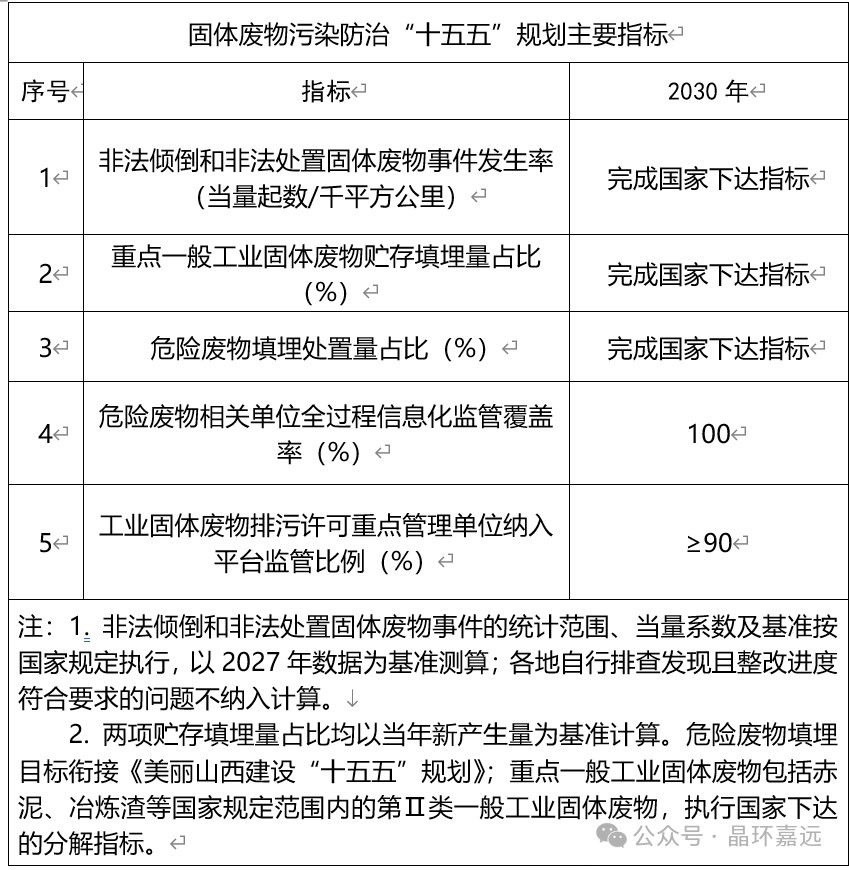
About RESOLAR
Shanghai RESOLAR Energy Technology Co., Ltd. is committed to becoming a recycled material photovoltaic group with deep decarbonization. RESOLAR focuses on technological innovation and builds a world-leading solution for component recycling, impurity removal of damaged cells, recycled silicon materials and cells, and cascaded utilization of components. With professional technology and services, we help customers realize the recycling and reuse of waste photovoltaic resources, and make positive contributions to the development of environmental protection and new energy industries. For more detailed information, you can browse the official website: www.resolartech.com .

Latest developments/news
Contact information
Service Hotline: 13585742918 (Monday to Friday 9:00-18:00)
Enterprise email: ps@resolartech.com (Reply within 48 hours after receiving the email consultation!)
Company Address: Building 8, No. 1528, Wangxu East Road, Fengjing Town, Jinshan District, Shanghai (Caohejing Fengjing Park)