


English
News Center
—— NEWS CENTER ——
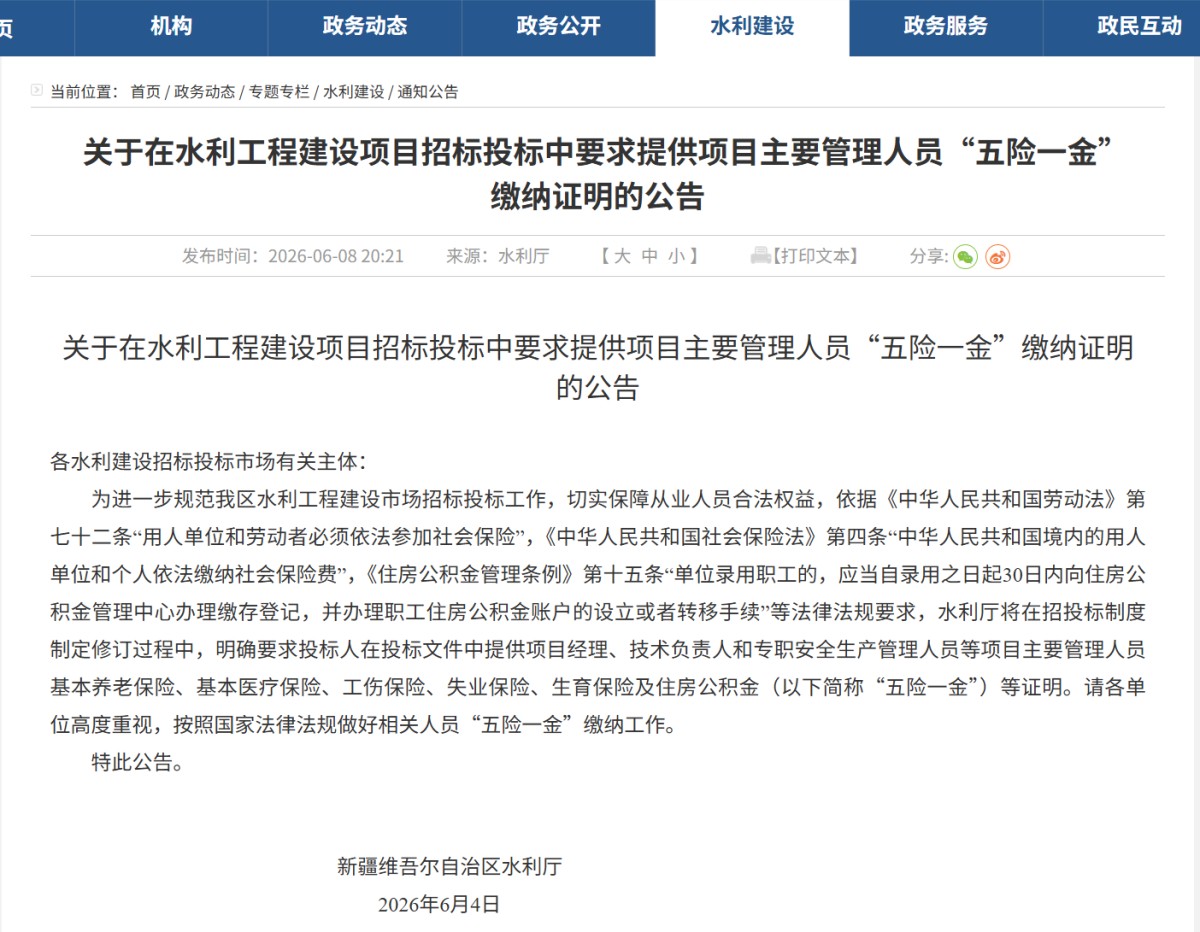
I. Policy Traceability: The “Five Social Insurance Programs and Housing Provident Fund” Verification Model in the Water Resources Sector Can Be Replicated in PV Recycling Bidding
This verification logic is not exclusive to the water resources sector and is fully applicable to the PV module recycling bidding market. As retired PV modules are currently entering a large-scale scrapping cycle, compliance governance in the industry has become urgent. Incorporating proof of payment of the five social insurance programs and the housing provident fund for core management personnel into bid qualification review can establish a screening threshold at the employment level, filtering out in batches trading intermediaries, shell companies, and illegal dismantling workshops that lack substantial production capacity and stable teams, and reshaping a fair competitive order in PV recycling bidding.
II. Existing Pain Points in the PV Recycling Industry: Shell Traders and Small Workshops Disrupt the Bidding Market
(I) A Large Number of Asset-Light Trading Companies Borrow Qualifications for Collusive Bidding and Lack Contract Performance Capability
- No fixed full-time management team: They only hold registered business licenses and have no long-term on-duty project leaders, environmental protection specialists, or safety managers. During bidding, they temporarily borrow personnel certificates from external entities for qualification affiliation, make short-term proxy social security payments, and make zero housing provident fund contributions, participating in bidding merely by piecing together qualifications;
- No self-owned disposal sites or equipment: They have no compliant hazardous waste storage workshops or harmless dismantling equipment. After winning a bid, they subcontract the work to underground small workshops to earn the price spread and cannot implement environmental disposal requirements;
- Frequent collusive and bid-rigging practices: Multiple affiliated shell enterprises bid simultaneously, manipulating quotations to squeeze out legitimate enterprises and creating a situation in which “bad money drives out good.”
(II) Illegal Dismantling Workshops Engage in Low-Cost Malicious Competition, Causing a Complete Breakdown of Compliance Bottom Lines
- Environmental pollution risks: Crude dismantling releases toxic and harmful substances such as lead, cadmium, and fluorides. Without anti-seepage measures or waste gas collection facilities, it contaminates soil and groundwater and violates the requirements of the Solid Waste Law and the Ecological and Environmental Code;
- Severe waste of resources: They simply strip off aluminum frames for resale, while high-value metals such as silicon, silver, and copper are discarded at will, which runs counter to the policy direction of PV circular utilization.
(III) Traditional Social Security-Only Verification Has Loopholes, While Housing Provident Fund Verification Creates Dual Evidence Locking
III. Screening Logic for Applying “Five Social Insurance Programs and Housing Provident Fund” Verification to PV Recycling Bidding
Layer 1: Screen Out Pure Trading Shell Companies
Layer 2: Eliminate Underground Small Workshops Without Fixed Employment
Layer 3: Prevent Certificate Affiliation and False Employment
About RESOLAR
Shanghai RESOLAR Energy Technology Co., Ltd. is committed to becoming a recycled material photovoltaic group with deep decarbonization. RESOLAR focuses on technological innovation and builds a world-leading solution for component recycling, impurity removal of damaged cells, recycled silicon materials and cells, and cascaded utilization of components. With professional technology and services, we help customers realize the recycling and reuse of waste photovoltaic resources, and make positive contributions to the development of environmental protection and new energy industries. For more detailed information, you can browse the official website: www.resolartech.com .

Latest developments/news
Contact information
Service Hotline: 13585742918 (Monday to Friday 9:00-18:00)
Enterprise email: ps@resolartech.com (Reply within 48 hours after receiving the email consultation!)
Company Address: Building 8, No. 1528, Wangxu East Road, Fengjing Town, Jinshan District, Shanghai (Caohejing Fengjing Park)