


English
News Center
—— NEWS CENTER ——
On June 27,the GB47834-2026 standard 《Minimum Allowable Values of Energy Efficiency and Energy Efficiency Grades for Crystalline Silicon Photovoltaic Modules and Inverters》 was officially released,and this standard will be implemented from January 1,2027.
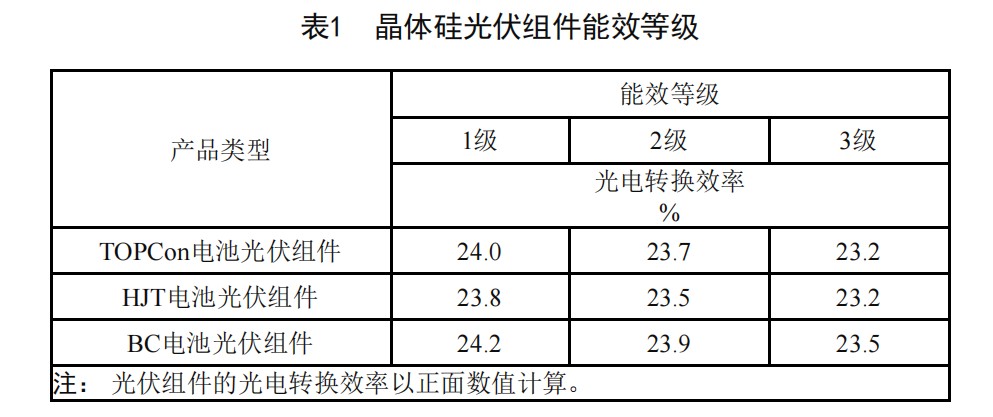
According to the standard,in terms of modules,the energy efficiency grades of crystalline silicon photovoltaic modules are divided into 3 grades,of which Grade 1 has the highest energy efficiency,the TOPCon access threshold is about 23.2%,HJT is about 23.2%,and BC is about 23.5%,and the photoelectric conversion efficiency of each energy efficiency grade shall not be lower than the specified value.
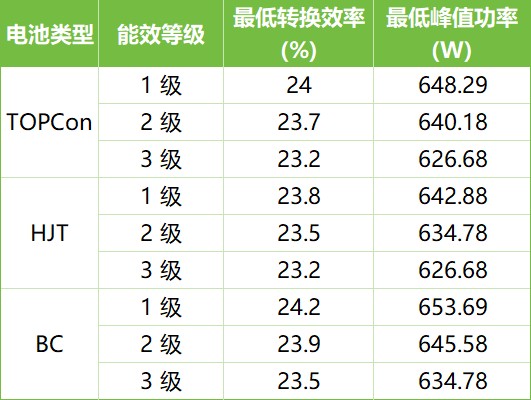
According to the standard module size:1134mm×2382mm、STC standard test conditions,the minimum front-side peak power of various types of photovoltaic modules is shown in the table below.
In addition,the coupled environmental stress degradation rate of crystalline silicon photovoltaic modules shall be not higher than 8.6%;for bifacial crystalline silicon photovoltaic modules,the bifaciality of TOPCon cell photovoltaic modules shall not be lower than 75%,HJT cells photovoltaic modules shall have a bifaciality of not lower than 85%,and BC cell photovoltaic modules shall have a bifaciality of not lower than 70%.
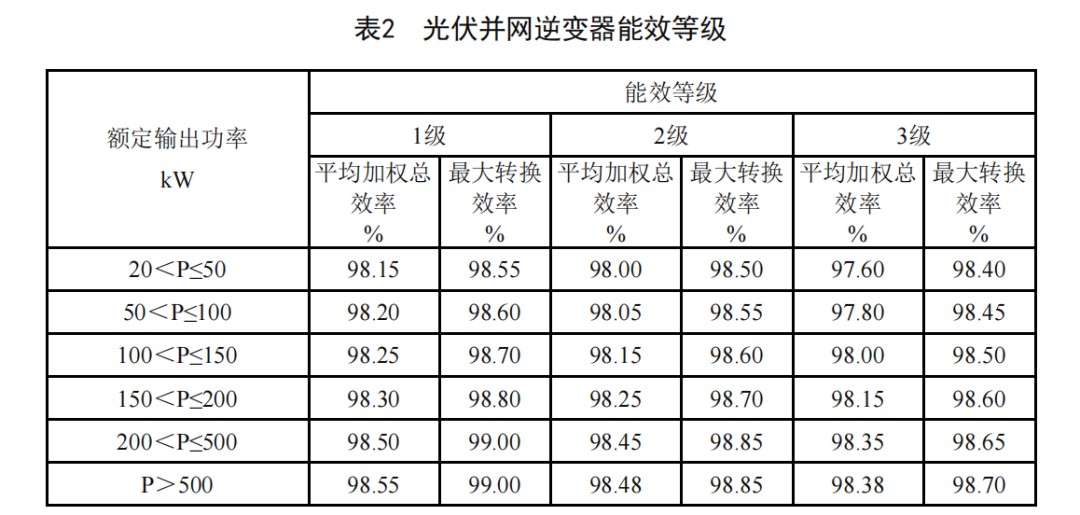
In terms of inverters,the energy efficiency grades of photovoltaic grid-connected inverters are divided into 3 grades,of which Grade 1 has the highest energy efficiency. The average weighted total efficiency and maximum conversion efficiency of photovoltaic grid-connected inverters at each energy efficiency grade shall not be lower than the specified values.
About RESOLAR
Shanghai RESOLAR Energy Technology Co., Ltd. is committed to becoming a recycled material photovoltaic group with deep decarbonization. RESOLAR focuses on technological innovation and builds a world-leading solution for component recycling, impurity removal of damaged cells, recycled silicon materials and cells, and cascaded utilization of components. With professional technology and services, we help customers realize the recycling and reuse of waste photovoltaic resources, and make positive contributions to the development of environmental protection and new energy industries. For more detailed information, you can browse the official website: www.resolartech.com .

Latest developments/news
Contact information
Service Hotline: 13585742918 (Monday to Friday 9:00-18:00)
Enterprise email: ps@resolartech.com (Reply within 48 hours after receiving the email consultation!)
Company Address: Building 8, No. 1528, Wangxu East Road, Fengjing Town, Jinshan District, Shanghai (Caohejing Fengjing Park)